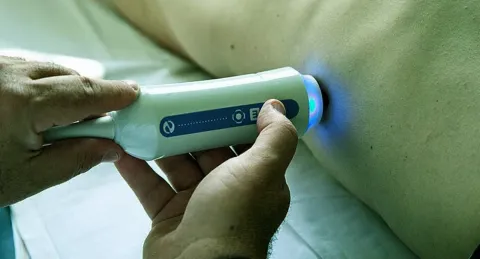
Metabolic dysfunction-associated steatotic liver disease (MASLD) is common in type 2 diabetes mellitus (T2DM). Transient elastography provides noninvasive assessment of liver stiffness measurement (LSM) and controlled attenuation parameter (CAP). An observational analysis presented at the AACE Annual Meeting 2026 evaluated the effect of empagliflozin on these parameters in patients with T2DM.
The analysis included 114 patients with T2DM who underwent baseline and follow-up transient elastography assessments. Biochemical parameters and liver scores were evaluated at both time points. Fibrosis was graded from F0 to F4 based on LSM thresholds, and steatosis was graded from S0 to S3 based on CAP values.
At follow-up, reductions were observed in body weight, body mass index, fasting and postprandial plasma glucose, A1C, total cholesterol, high-density lipoprotein, low-density lipoprotein, and very-low-density lipoprotein cholesterol, triglycerides, triglyceride-glucose index, and homeostatic model assessment of insulin resistance (HOMA-IR). Liver enzymes, including aspartate aminotransferase and alanine aminotransferase, were also reduced (P<0.05 to P<0.001).
LSM values decreased across fibrosis stages. Values declined from 5.3 to 4.6 kPa in F0–F1, from 9.0 to 6.7 kPa in F2, from 11.0 to 8.6 kPa in F3, and from 23.0 to 11.5 kPa in F4 (P<0.05 to P<0.001).
CAP scores decreased significantly only in the S3 steatosis group (330 to 288 dB/m; P<0.001), with no significant changes reported in lower steatosis grades. At follow-up, 75% of participants had LSM values in the no-significant-fibrosis range (≤8.1 kPa), compared with 47% at baseline (P<0.001).
The findings indicate that empagliflozin use corresponded with improvements in glycemic, metabolic, and elastography-derived liver parameters in patients with T2DM.