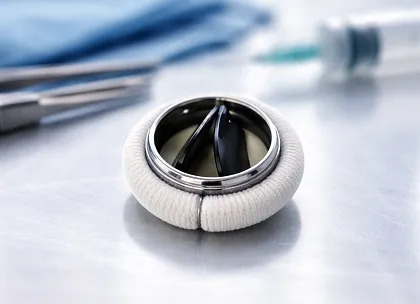
Long-term valve durability has become increasingly important as bioprosthetic valve use expands in surgical aortic valve replacement (SAVR), particularly among younger patients. A prospective multicenter study presented at the AATS 2026 evaluated long-term outcomes with a bovine pericardial bioprosthesis incorporating anticalcification tissue technology.
From 2013 to 2016, a total of 689 participants underwent SAVR. Mean age was 67 ± 11 years, mean Society of Thoracic Surgeons Predicted Risk of Mortality (STS-PROM) score was 2.0%, and 74% of participants had baseline New York Heart Association (NYHA) functional class II or III symptoms. At 5 years, the trial entered an extended follow-up phase across 10 centers to evaluate outcomes through 10 years. Safety events were independently adjudicated, and echocardiograms were analyzed by a core laboratory.
Findings
- Among 239 patients entering extended follow-up, 91.3% (126/138) of eligible participants completed 10-year visits, while 58 participants had pending visits.
- Freedom from structural valve deterioration (SVD), reoperation due to SVD, and all-cause reoperation at 10 years was 97.5%, 97.3%, and 93.8%, respectively.
- Ten-year freedom from all-cause mortality was 77.2%.
- Five cases of SVD were observed, with three occurring after year 7.
- Hemodynamic performance remained clinically stable through 10 years, with a meaneffective orifice area of 1.68 ± 0.61 cm² and a mean gradient of 10.79 ± 5.09 mmHg.
- In 95.7% of evaluable patients, transvalvular regurgitation was absent or trivial/trace, while paravalvular regurgitation was absent in all evaluable patients.
- NYHA functional class remained I or II in 97.3% of patients at long-term follow-up.
In this prospective multicenter SAVR cohort, the bovine pericardial bioprosthesis demonstrated sustained hemodynamic performance through 10 years of follow-up. Rates of structural valve deterioration and valve-related reintervention remained low during long-term assessment. The findings support favorable long-term durability with this bioprosthetic valve approach.