Hypoglycemia Triggers Lasting Inflammation
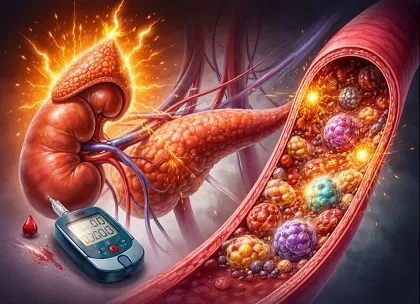
Hypoglycemia causes more than just symptoms in diabetes patients. It sparks inflammation that lasts days after sugar levels normalize. Endocrinologists see repeated lows cause chronic problems. This study tests if adrenaline drives this response directly. The results were published in the Diabetologia.
Controlled Adrenaline Infusion Mimics Hypo
Researchers gave adults with type 1 diabetes and matched controls intravenous adrenaline at 0.04 µg kg−1 min−1 for 1 hour. This dose matches levels seen during hypoglycemia. They drew blood at baseline, 30 minutes, 60 minutes, 180 minutes, then days 1, 3, and 7 after infusion.
White Cells Jump Immediately
Adrenaline raised neutrophil, lymphocyte, and monocyte counts right away in both groups. Neutrophils and monocytes dropped back to baseline by day 1. Lymphocytes stayed high through day 7 in both T1D patients and controls.
Monocytes Turn Pro-Inflammatory
Isolated monocytes showed more inflammatory function after adrenaline. Ex vivo lipopolysaccharide stimulation caused higher cytokine secretion in both groups. This shift happened fast and persisted.
Circulating Markers Stay Elevated
Olink inflammatory panel found higher levels of urokinase-type plasminogen activator, Fms-like tyrosine kinase 3 ligand, chemokine (C-X3-C) ligand 1, and fibroblast growth factor 21 after 7 days. T1D patients showed stronger responses than controls.
Prevent Lows to Cut Inflammation
Adrenaline clearly drives hypoglycemia's inflammatory effects on cells and proteins. Diabetes teams must prioritize glucose stability. Continuous glucose monitors help avoid these adrenaline surges.
Target Counter-regulation in T1D
Beta blockers or other therapies might blunt harmful inflammation from hypos. Findings explain fatigue and vascular risk after repeated lows.
Clinical Practice Changes Now
Counsel patients on hypo avoidance as inflammation prevention. Track WBC trends in brittle diabetes cases.
Featured
Off
Page Content
#ffffff
Anonymous user
On
Authenticated user
On
Premium
On
Paid / Sponsored
On
Key highlights
- Researchers infused adrenaline at 0.04 µg kg−1 min−1 for 1h in adults with type 1 diabetes and matched controls to mimic hypoglycemia counter-regulation levels.
- Adrenaline acutely increased neutrophil, lymphocyte, and monocyte counts in both groups, with neutrophils/monocytes normalizing by day 1 but lymphocytes elevated through day 7.
- Monocyte function shifted toward inflammation, shown by increased cytokine secretion after ex vivo lipopolysaccharide stimulation in both T1D patients and controls.
- Circulating inflammatory proteins including urokinase-type plasminogen activator, Fms-like tyrosine kinase 3 ligand, CX3CL1, and FGF21 rose after 7 days, more pronounced in T1D group.
- Adrenaline at hypoglycemia-comparable levels drives acute and prolonged inflammatory responses, explaining sustained immune activation after hypoglycemic events.
Source
Mustafajev IF, Hendriksz MS, Stienstra R, Tack CJ, de Galan BE, Meijer RI. Adrenaline is a prominent driver of inflammatory responses following hypoglycaemia. Diabetologia. Published online January 29, 2026. doi: https://doi.org/10.1007/s00125-026-06667-9
Thumbnail
Speciality
Currency
Sub Speciality
Sub Sub Speciality
Short Description
T1D study shows IV adrenaline at 0.04 µg kg−1 min−1 for 1h mimics hypoglycemia effects, raising neutrophils/monocytes acutely and cytokines for 7 days in T1D and controls.
User Segments
Release Date
Featured Order
0
Is Paid
0
Send Notification
Off