Doctors at West China Hospital, Sichuan University, have shed new light on how diabetic foot ulcers (DFUs) behave differently across age groups in type 2 diabetes patients.
This retrospective study published in the Journal of Diabetes Investigation tracked 1,209 patients admitted with foot ulcers, splitting them into young under 45 years, middle-aged from 45 to 64, and elderly 65 and older. The young group had 65 patients, middle-aged 509, and elderly 635. Everyone shared a long diabetes history averaging 11.5 years, along with poor blood sugar control that set the stage for ulcers. Researchers followed them for a median of 44.5 months through clinic visits or phone calls, capturing healing rates, recurrences, and long-term outcomes. These insights could guide tailored treatments to cut complications.
Patterns Emerge by Age Group
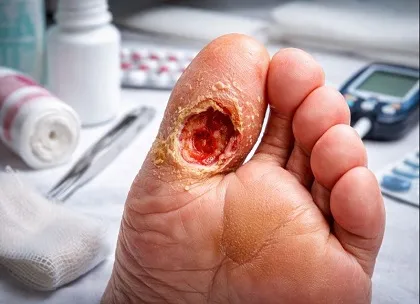
All age groups dealt with recurrent ulcers in about one-third of cases, highlighting the stubborn nature of DFUs. However, comorbidities piled up with age—hypertension, coronary artery disease, chronic kidney disease, and peripheral artery disease hit elderly patients hardest, with differences reaching high statistical significance. Wound types varied too: young patients mostly had neuropathic ulcers at 48.3%, often from mechanical injuries and numbness. Middle-aged leaned toward neuro-ischemic ulcers at 42.1%, blending nerve damage with poor blood flow. Elderly topped that at 56.9%, where vascular problems dominated alongside neuropathy. During hospital stays, healing rates dropped sharply in the elderly at 18.9%, compared to 27.7% in young and 26.9% in middle-aged patients.
Long-Term Follow-Up Reveals Harsh Realities
Over the 44.5-month follow-up, ranging from 18.7 to 74.5 months in most cases, 375 patients, or 36.2%, passed away. All-cause mortality climbed steadily with age, again showing strong significance. Younger patients stood out for worse glycemic control and trauma-related wounds, while older ones grappled with more vascular woes and slower healing. This age-dependent shift underscores why one-size-fits-all care falls short for DFUs.
Tailoring Care for Better Outcomes
Prevention and treatment must adapt to age-specific risks. Young patients need aggressive diabetes education and foot protection to avoid neuropathy-driven ulcers. Middle-aged and elderly groups demand vascular checks, better circulation management, and multidisciplinary teams to tackle neuro-ischemic wounds. Early intervention could boost healing and survival, especially as DFUs increasingly strike younger people.
Featured
Off
Page Content
#ffffff
Anonymous user
On
Authenticated user
On
Premium
On
Paid / Sponsored
On
Key highlights
- Diabetic foot ulcer characteristics vary by age, with younger patients showing more neuropathic ulcers and poorer glycemic control.
- Comorbidities like hypertension, coronary artery disease, chronic kidney disease, and peripheral artery disease increase significantly with patient age.
- Neuro-ischemic ulcers predominate in middle-aged (42.1%) and elderly (56.9%) patients compared to neuropathic types in the young (48.3%).
- In-hospital ulcer healing rates are significantly lower in elderly patients (18.9%) versus young (27.7%) and middle-aged (26.9%).
- Long-term all-cause mortality rises sharply with age during 44.5-month follow-up, affecting 36.2% of the cohort overall.
Source
Gong HP, Ren Y, Swe TH, Li ZY, Zha PP, Chen DW, Ran XW, Wang C. Age-related variations in clinical characteristics of patients with diabetic foot ulcers. J Diabetes Investig. 2026 Jan;17(1):96-102. doi: https://doi.org/10.1111/jdi.70181
Thumbnail
Speciality
Currency
Sub Speciality
Sub Sub Speciality
Short Description
A large study of 1,209 diabetic foot ulcer patients shows stark age differences: younger ones face neuropathic wounds from poor sugar control, while elderly suffer vascular issues and higher death rates.
User Segments
Release Date
Featured Order
0
Is Paid
0
Send Notification
Off