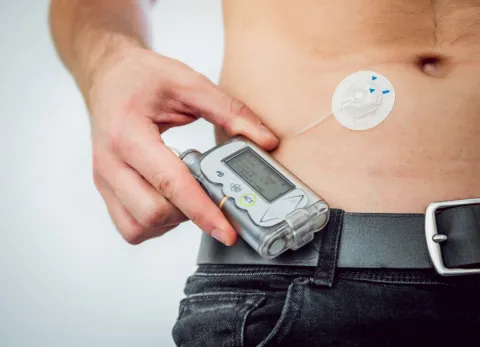
Advanced hybrid closed-loop (AHCL) systems are increasingly used for insulin delivery in adults with type 1 diabetes mellitus (T1DM), and time in tight range (TITR) is emerging as an additional glycemic target. A multicenter observational cross-sectional study published in Diabetes & Metabolism compared TITR across three commercially available AHCL systems used in Spain.
Adults aged 18 years or older with T1DM who had used the same AHCL system for at least 3 months were consecutively enrolled. The systems evaluated included a pump-integrated automated-correction AHCL system, a pump-integrated predictive-control AHCL system, and a smartphone-operated adaptive AHCL system. The primary objective was to assess differences in TITR between systems.
A total of 189 participants were included, of whom 66.8% were women. Mean age was 42.8 years, mean diabetes duration was 23.5 years, and mean time in automated mode was 94.6%. Overall TITR was 51.7%, with no significant between-group difference (P=0.154).
The adaptive smartphone-operated AHCL system showed higher nocturnal TITR at 53.6%, compared with 45.9% and 50.6% in the other groups (P=0.029). However, that same group had higher time below range level 1 and level 2 at 3.9% and 0.7%, compared with 1.6% and 0.2% and with 2.5% and 0.5% in the comparator groups (P<0.001). Glycated hemoglobin (HbA1c) was higher in the automated-correction AHCL group than in the other two groups (6.9% vs 6.5%; P=0.003).
These findings suggest AHCL systems can achieve TITR above 50% overall, although differences in selected glycemic metrics may have clinical relevance when individualizing insulin delivery strategies.