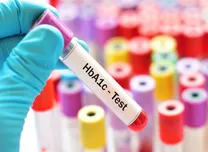
An artificial intelligence model demonstrated over 70% accuracy in predicting HbA1c trends using standard clinical variables. This study, published in Future Science OA, developed a language model–supported neural network designed to forecast HbA1c trajectories in individuals with diabetes mellitus.
The proposed framework, GLM DM (Language Model Boosted Neural Network), combined synthetic data augmentation using Generative Adversarial Networks with language model–based feature encoding. This approach transformed routine clinical data into detailed latent representations, allowing the model to identify complex associations that influence HbA1c patterns over time.
Using clinical records from 257 adults with diabetes, the model achieved 70.2% overall accuracy and outperformed classical machine learning methods and transformer-based models. Accuracy reached 68.2% in type 1 diabetes and 72.7% in type 2 diabetes. Ablation analyses confirmed that both GAN augmentation and language model embeddings contributed meaningfully to improved predictive performance.
By relying on readily available clinical variables, the model offers a potential tool for forecasting short-term HbA1c trends and supporting proactive diabetes management. Its structure provides a low-resource option for prediction and may serve as a complementary tool in clinical settings.