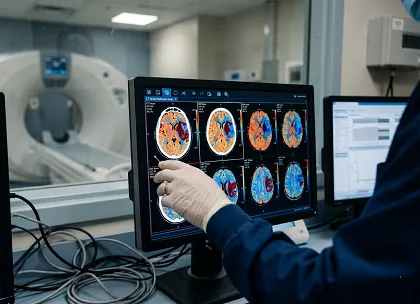
Determining whether coronary lesions are likely to cause ischemia remains central to evaluating patients with suspected coronary artery disease (CAD). A post-hoc vessel-level analysis published in the European Heart Journal - Cardiovascular Imaging evaluated whether artificial intelligence-based quantitative computed tomography (AI-QCT) measures could help classify ischemia risk.
The analysis included patients from the CREDENCE and PACIFIC-1 studies who underwent coronary computed tomography angiography (CCTA) and invasive fractional flow reserve (FFR). The pooled dataset comprised 612 patients with 1,727 vessels from CREDENCE and 208 patients with 612 vessels from PACIFIC-1. Diameter stenosis, percent atheroma volume (PAV), and average lumen area (ALA) were assessed.
Thresholds were defined as low likelihood of ischemia (<15% abnormal FFR prevalence), intermediate likelihood (15% to 75%), and high likelihood (>75%). In CREDENCE, every vessel with 1% to 24% stenosis fell into the low-likelihood group. Among vessels with 25% to 49% stenosis, 74% were low likelihood, while 26% with greater plaque burden and smaller lumen area were intermediate likelihood. Vessels with 50% to 69% stenosis were placed in the intermediate category.
For lesions with 70% to 99% stenosis, 93% were categorized as high likelihood, except for a small subgroup with lower PAV and larger ALA. External validation in PACIFIC-1 showed that 86% of vessels with <50% stenosis were low likelihood, whereas 61% of vessels with 50% to 99% stenosis were high likelihood.
These findings indicate that integrating plaque volume and lumen area with stenosis severity may help refine CCTA-based triage decisions and identify patients who may need additional functional testing.