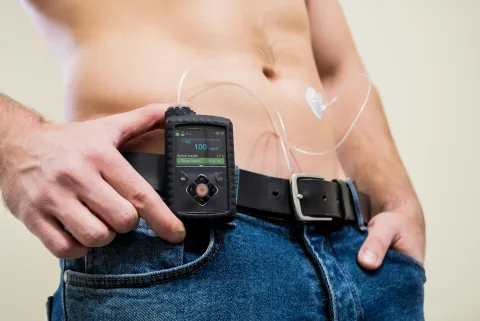
Achieving stable glycemic control remains a persistent challenge in individuals with type 2 diabetes mellitus (T2DM) requiring insulin therapy. A systematic review and meta-analysis published in Diabetes Care evaluated the effects of automated insulin delivery (AID) systems on continuous glucose monitoring-based outcomes in this population.
This systematic review and single-arm meta-analysis included nine studies with 1,530 participants with T2DM using AID systems. Data sources included PubMed, Embase, the Cochrane Library, and ClinicalTrials.gov through March 10, 2025. Outcomes assessed included time in range (TIR) (3.9-10.0 mmol/L), time above range (TAR), time below range (TBR), mean glucose, and hemoglobin A1c (HbA1c). A random-effects model was applied to evaluate pooled outcomes.
AID systems increased TIR by 16.06% (95% confidence interval [CI] 10.48–21.65) and reduced TAR by −15.90% (95% CI −21.44 to −10.36). HbA1c decreased by −1.27% (95% CI −2.06 to −0.48), while mean glucose decreased by −21.34 mg/dL (95% CI −32.06 to −10.62). A modest reduction in TBR was also observed. No significant changes were reported in body weight or body mass index (BMI).
These findings indicate that AID systems were associated with improved glycemic control in insulin-treated T2DM. Interpretation should consider study heterogeneity, the inclusion of limited randomized trials, and imputed data.