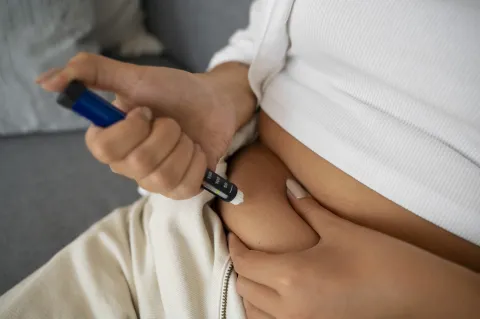
Most people with type 1 diabetes mellitus (T1DM) avoid fasting during Ramadan because of dysglycemia risk. Insulin delivery modality may influence both glycemic stability and hypoglycemia-related concerns during prolonged fasting. A comparative analysis published in Diabetes Research and Clinical Practice assessed efficacy, safety profiles, and fear of hypoglycemia (FOH) across four insulin delivery strategies during Ramadan.
The analysis included 278 people with T1DM using automated insulin delivery (AID; n = 114), sensor-augmented pump with predictive low-glucose suspend (SAP-PLGS; n = 4), sensor-unintegrated pump (SUP; n = 24), or multiple daily injections plus continuous glucose monitoring (MDI + CGM; n = 136). Mean percent time in range (TIR) remained stable in the AID group (73.2% before Ramadan and 73.4% during Ramadan). TIR increased modestly with SAP-PLGS (62% to 65.5%) but declined with SUP (57.8% to 54.6%) and MDI + CGM (52.1% to 47.4%). The pre/during-Ramadan Glycemia Risk Index was lowest and stable with AID (30/29), compared with 60/64 in the MDI + CGM group.
The “double target of fasting,” defined as breaking the fast on ≤2 days and achieving TIR >70%, was achieved by 46.5% of AID users, 25% with SAP-PLGS, 12.5% with SUP, and 7.35% with MDI + CGM. After adjustment for age, sex, employment or insurance status, educational level, and diabetes duration, AID use was associated with a 22-fold higher likelihood of achieving this double target compared with MDI + CGM.
Overall, FOH scores did not significantly differ across groups, although AID users had the lowest behavioral avoidance scores. The findings indicate that AID use during Ramadan was associated with fasting more days, better glycemic control, and fewer hypoglycemia avoidance behaviors. The International Diabetes Federation/Diabetes and Ramadan International Alliance risk calculator was proposed to consider a lower risk score for AID technology when used by people with T1DM.