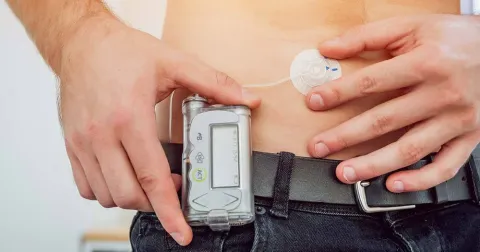
For adults with type 1 diabetes, software changes in hybrid closed-loop insulin delivery may affect glucose metrics during routine use. In Journal of Diabetes Science and Technology, a post-market report analyzed continuous glucose monitoring (CGM) data from consenting adults with type 1 diabetes equipped in Europe with the Diabeloop Generation 1 hybrid closed-loop system (DBLG1) between November 1, 2023 and January 31, 2025. The primary endpoint was time in range (TIR) of 70 to 180 mg/dL. A two-step analysis compared algorithm versions v1.12 versus v1.16 using retrospective data and v1.16 versus v1.17 using an ambispective before-and-after approach.
In the first step (319 days; 937 patients), median TIR increased from 65.3% (interquartile range [IQR], 58.4%-72.1%) with v1.12 (n=269) to 71.3% (IQR, 63.3%-78.0%) with v1.16 (n=668). Time in a tight range (70–140 mg/dL) increased from 37.5% (IQR, 30.6%-43.1%) to 40.4% (IQR, 31.7%-48.5%), while time in hypoglycemia remained stable. Time above 250 mg/dL decreased from 8.9% to 5.4%, glucose management indicator (GMI) from 7.3% to 7.1%, coefficient of variation (CV) from 30.4% to 27.4%, and glucose risk index (GRI) from 38.0 to 30.0.
In the second step (120 days; 1,212 patients), upgrading from v1.16 to v1.17 increased median TIR from 68.8% (IQR, 59.6%-76.8%) to 70.8% (IQR, 63.0%-77.6%), with marginal changes in other glucose metrics. Incidence rates of severe hypoglycemia or hyperglycemia remained very low.
Successive algorithm updates were associated with higher time in range without reported deterioration in safety metrics.