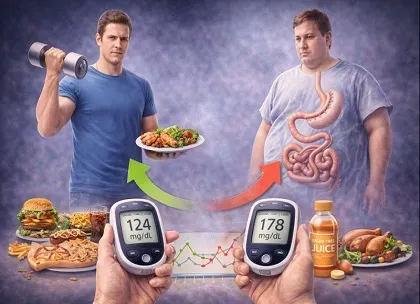
Dual tracer study reveals behavioral diet therapy produces greater postprandial glucose improvement than RYGB after 20% weight loss in obese T2D patients through doubled insulin-mediated glucose disposal.
Postprandial hyperglycemia represents primary driver of oxidative stress and beta cell exhaustion in obesity-associated type 2 diabetes, with therapeutic strategies differentially impacting glucose appearance rates alongside insulin and non-insulin mediated disposal pathways critical to cardiometabolic risk mitigation.
Investigators employed sophisticated intravenous and oral dual glucose tracer protocol quantifying systemic glucose appearance, insulin-mediated glucose disposal (IMGD), and non-insulin-mediated glucose disposal (NIMGD) across four hours following standardized mixed meal challenge in obese type 2 diabetes adults before and after matched 20% weight reduction achieved through either behavioral diet therapy (BDT) in eleven participants or Roux-en-Y gastric bypass surgery in nine participants. The results were published in the Diabetes.
Endogenous Glucose Production Suppression Universal
Both intervention arms demonstrated equivalent reductions in total postprandial glucose appearance rates attributable to suppressed hepatic endogenous glucose production reflecting weight loss-mediated improvements in portal insulin delivery and hepatic lipid content normalization independent of anatomic reconfiguration. This convergence confirms fundamental metabolic restoration precedes specialized gut hormone responses characterizing bariatric operations.
IMGD Doubling Distinguishes BDT Superiority
Behavioral diet therapy uniquely doubled insulin-mediated glucose disposal capacity contrasting Roux-en-Y gastric bypass stasis, driving substantially greater decrements in total and incremental postprandial plasma glucose area under curve measurements favoring conservative intervention despite matched weight loss magnitude.
Clinical Relevance Preserves RYGB Therapeutic Potency
Endocrinologists confronting obese type 2 diabetes patients should prioritize behavioral diet therapy candidacy assessment targeting postprandial glucose optimization through sustained insulin sensitivity gains while reserving Roux-en-Y gastric bypass for refractory cases acknowledging potent remission potential despite inferior acute disposal kinetics. Serial mixed meal testing refines therapeutic trajectory monitoring across weight loss modalities maximizing cardiovascular risk factor convergence.
Featured
Off
Page Content
#ffffff
Anonymous user
On
Authenticated user
On
Premium
On
Paid / Sponsored
On
Key highlights
- Behavioral diet therapy doubles insulin-mediated glucose disposal unlike RYGB after 20% weight loss in obese T2D patients.
- Both interventions equally suppress endogenous glucose production reducing total postprandial glucose appearance rates.
- BDT produces greater total and incremental postprandial glucose area under curve reductions than RYGB.
- Dual tracer protocol quantifies IMGD, NIMGD, and glucose appearance across 4 hours post-mixed meal challenge.
- RYGB preserves potent glycemic remission potential despite inferior postprandial disposal kinetics versus BDT.
Source
Mittendorfer B, Patterson BW, Eagon JC, Yoshino M, Klein S. Effects of Marked Weight Loss Induced by Gastric Bypass Surgery or Low-Calorie Diet Alone on Postprandial Glucose Disposal in Type 2 Diabetes. Diabetes. 2025;75(2):264-272. doi: https://doi.org/10.2337/db25-0737
Thumbnail
Speciality
Currency
Sub Speciality
Sub Sub Speciality
Short Description
Dual tracer study reveals behavioral diet therapy produces greater postprandial glucose improvement than RYGB after 20% weight loss in obese T2D patients through doubled insulin-mediated glucose disposal.
User Segments
Release Date
Featured Order
0
Is Paid
0
Send Notification
Off