Type 1 Diabetes Starts at Birth
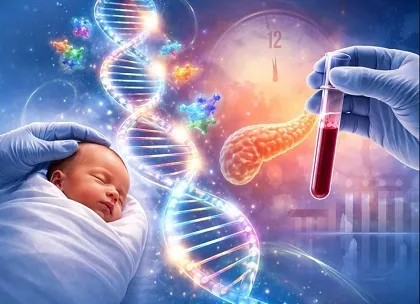
Type 1 diabetes cases rise worldwide but early triggers stay unclear. Population studies rarely catch signals before islet autoimmunity begins. Pediatric endocrinologists need markers present at birth. This Swedish study finds them through proteomics. The results were published in the Nature Communications.
Massive Birth Cohort Yields Clues
Researchers analyzed the ABIS birth cohort of 16,683 Swedish children. Olink proteomics measured inflammatory proteins in 286 controls and 146 T1D cases at birth. Diagnosis came at mean age 12.6 years later. Proteins showed differences years before symptoms appeared.
Neutrophils and Matrix Mark Risk
Birth samples revealed higher neutrophil migration and cytotoxicity proteins in future T1D cases. Extracellular matrix remodeling signals appeared elevated too. Immune regulation proteins changed early. Markers stayed significant despite family diabetes history.
Metabolites and Toxins Tie In
High-risk protein patterns linked to altered stearic acid, lysine, and glutamine levels. Persistent toxins like perfluorodecylethanoic acid and PFOS associated with the signature. Environment meets biology at birth.
Machine Learning Nails Prediction
Protein subset predicted T1D with area under curve 0.89 plus or minus 0.02 using machine learning. Prediction worked independent of HLA genetic risk. Accuracy held across the cohort.
Prevention Window Opens Early
β-cell stress and innate immune shifts happen before adaptive autoimmunity. Non-invasive birth screening could identify at-risk infants. Lifestyle or immune modulation might protect islets proactively.
Screen Newborns for Diabetes Risk
Neonatologists should consider proteomics panels at birth. Early surveillance beats late intervention. Findings demand replication in other populations now.
Featured
Off
Page Content
#ffffff
Anonymous user
On
Authenticated user
On
Premium
On
Paid / Sponsored
On
Key highlights
- Swedish ABIS birth cohort study analyzed Olink proteomics from 286 controls and 146 T1D cases collected at birth, with diagnosis at mean age 12.6 years.
- Inflammatory proteins at birth showed differential abundance linked to neutrophil migration, cytotoxicity, extracellular matrix remodeling, and immune regulation years before T1D diagnosis.
- Protein markers remained significant after adjustment for prenatal factors including family diabetes history and associated with stearic acid, lysine, glutamine, and PFAS toxins.
- Machine learning identified protein subset predicting T1D with AUC 0.89 ± 0.02, independent of HLA genetic risk status.
- Findings suggest innate immune and tissue remodeling pathways perturb at birth, creating prevention opportunities before β-cell inflammatory attack begins.
Source
Ahrens AP, Dias R, Tuulia Hyötyläinen, Matej Orešič, Triplett EW, Ludvigsson J. The inflammatory path toward type 1 diabetes begins during pregnancy. Nature Communications. Published online January 7, 2026. doi: https://doi.org/10.1038/s41467-025-67712-6
Thumbnail
Speciality
Currency
Sub Speciality
Sub Sub Speciality
Short Description
Swedish ABIS cohort study identifies birth proteins predicting T1D with AUC 0.89, linked to neutrophil migration and β-cell stress, independent of HLA risk.
User Segments
Release Date
Featured Order
0
Is Paid
0
Send Notification
Off