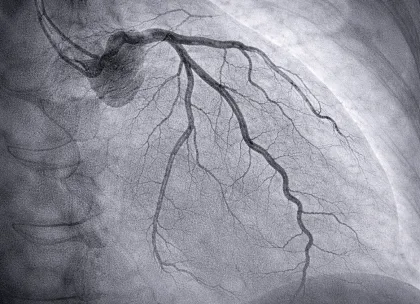
Coronary artery disease (CAD) may develop over time even in individuals initially found to have normal coronary arteries on imaging. A post-hoc observational analysis of the Scottish Computed Tomography of the HEART (SCOT-HEART) trial evaluated long-term development of coronary artery disease in patients with normal baseline Coronary Computed Tomography Angiography (CCTA) results. The study was published in European Radiology.
The analysis included 524 patients with normal coronary arteries on initial CCTA (mean age 53 ± 10 years; 38% male). Patients were followed for a median of 9.3 years (interquartile range [IQR] 9.3–10.8 years). Repeat imaging was evaluated using clinically indicated CT scans, including repeat CCTA or chest CT. Imaging studies were visually assessed for the presence, severity, and type of CAD.
During follow-up, 31 patients (6%) underwent repeat CCTA and 162 patients (31%) underwent chest CT. Baseline clinical characteristics were similar between those who did and did not undergo repeat CCTA, while individuals who underwent chest CT were older and had higher cardiovascular risk scores. CAD was detected in 48% of repeat CCTA scans (n = 15) and in 25% of chest CT scans (n = 41). The median time to CT scan demonstrating CAD was 8.1 years (IQR 6.9–9.7). There was no difference in all-cause mortality or combined CAD death and non-fatal myocardial infarction among patients with CAD detected on subsequent CT. However, these patients were more likely to undergo invasive coronary angiography (adjusted hazard ratio [aHR] 4.94; 95% CI 1.95–12.51; p < 0.001)) and revascularization (aHR 19.99; 95% CI 1.69–237.1; p = 0.018).
Approximately one third of patients with initially normal coronary arteries on CCTA developed CAD on subsequent CT imaging during long-term follow-up. CAD was identified in a proportion of patients with initially normal coronary arteries on CCTA. Detection of CAD on subsequent imaging was associated with increased likelihood of invasive evaluation and revascularization.