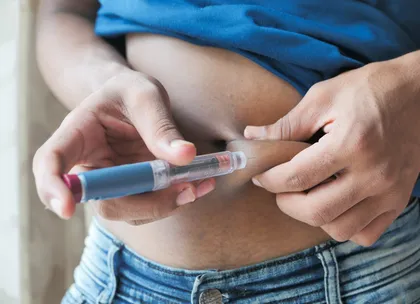
Combination incretin-based therapies continue to expand treatment options for patients with type 2 diabetes mellitus (T2DM) and obesity. A study published in The Lancet Diabetes & Endocrinology evaluated the efficacy and safety of a fixed-dose combination of the amylin receptor agonist cagrilintide and the glucagon-like peptide-1 (GLP-1) receptor agonist semaglutide for glycemic control in adults with T2DM and overweight or obesity.
The REIMAGINE 2 trial was a randomized, double-blind, placebo- and active-controlled study conducted across 30 countries evaluating once-weekly cagrilintide-semaglutide in adults with inadequately controlled type 2 diabetes mellitus (T2DM). Eligible participants had glycated hemoglobin (HbA1c) levels of 7.0%-10.5% and body mass index (BMI) ≥25 kg/m² and were receiving metformin with or without a sodium-glucose cotransporter-2 (SGLT2) inhibitor.
Participants were randomized to cagrilintide-semaglutide, semaglutide, cagrilintide, or placebo for 68 weeks. The primary endpoint evaluated change in HbA1c from baseline to week 68 for cagrilintide-semaglutide 2.4 mg versus semaglutide 2.4 mg. Among 3593 screened individuals, 2713 underwent randomization, and 2595 (95.7%) completed the study.
Findings
- Mean baseline HbA1c was 8.2%.
- At week 68, mean HbA1c reduction was greater with cagrilintide-semaglutide 2.4 mg compared with semaglutide 2.4 mg alone (−1.91 vs −1.75 percentage points), corresponding to an estimated treatment difference of −0.16 percentage points (95% CI −0.27 to −0.05; P=0.0035).
- Adverse events occurred in 86.9% of participants receiving cagrilintide-semaglutide 2.4 mg and 81.2% of those receiving semaglutide 2.4 mg.
- Gastrointestinal disorders were the most frequently reported adverse events across active treatment groups.
The REIMAGINE 2 trial showed that cagrilintide-semaglutide provided greater HbA1c reduction than semaglutide alone in adults with T2DM and overweight or obesity. Safety findings were generally consistent with prior experience for GLP-1 receptor agonists and cagrilintide-containing therapy.