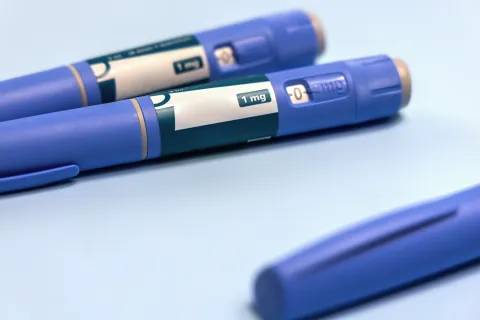
Maintaining glycemic control in people with type 2 diabetes mellitus (T2DM) remains a challenge in routine clinical practice. A real-world observational analysis published in Diabetes Therapy evaluated glycemic control and safety associated with a fixed-ratio combination of insulin degludec and liraglutide in Chinese adults with T2DM.
Data from the Tianjin Health and Medical Big Data Super Platform were used to assess clinical characteristics, glycemic control, and safety in adults who received this therapy between March 5, 2022 and June 30, 2024. The primary endpoint was the change in glycated hemoglobin (HbA1c) from baseline to day 180. Secondary endpoints included changes in HbA1c according to baseline characteristics, along with changes in fasting plasma glucose (FPG), postprandial glucose (PPG), daily insulin dose, and treatment persistence. Hypoglycemic events and gastrointestinal adverse events were assessed as exploratory endpoints.
A total of 12,103 adults were included in both the full analysis set and safety analysis set, and 3062 individuals who received treatment for 180 days were included in the effectiveness analysis. At day 180, mean HbA1c decreased by 1.08% (SD 1.87; p < 0.001), FPG by 2.34 mmol/L (SD 3.61; p < 0.001), PPG by 2.10 mmol/L (SD 4.86; p < 0.001), and daily insulin dose by 4.95 U/day (SD 21.93; p < 0.001). Subgroup analyses showed significant reductions in HbA1c, independent of prior treatment, age, baseline HbA1c, daily insulin dose, and fasting C-peptide quartiles.
Median treatment persistence was 141.67 days (95% CI 135.67-146.67). Hypoglycemia was reported in 0.7% of individuals, and gastrointestinal adverse events were reported in 11.1%. Overall, this analysis showed that the fixed-ratio combination was associated with reductions in HbA1c, FPG, and PPG, with low reported rates of hypoglycemia and gastrointestinal adverse events in this population.