Is Banner Display?
Off
Page Content
#ffffff

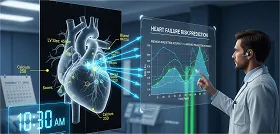
A long-term study involving 6,667 participants (52.7% women) found that cardiac CT imaging biomarkers can significantly improve the prediction of new-onset heart failure (HF). The study was published in Journal of Cardiovascular Computed Tomography. Over a median follow-up of 17.7 years, 426 participants developed HF.

The study measured several cardiac CT parameters, such as left ventricular size indexed (LVSi), and calcification scores of the coronary arteries (CAC), aortic valve (AVC), mitral annulus (MAC), and thoracic aorta (TAC). The research evaluated whether adding these biomarkers could enhance the accuracy of the existing Pooled Cohort equations to the Prevent Heart Failure (PCP-HF) score used to estimate 10-year HF risk.

The analysis revealed that certain biomarkers were strongly predictive of future HF. The hazard ratios were 1.11, 1.06, and 1.17 for log-transformed coronary artery calcium (CAC), log-transformed aortic valve calcification (AVC), and LVSi. 
Anonymous user
On
Authenticated user
On
Premium
On
Paid / Sponsored
On
Key highlights
  • 426 out of 6,667 individuals developed heart failure over nearly 18 years.
  • Higher coronary artery calcium (HR 1.11), aortic valve calcium (HR 1.06), and LVSi (HR 1.17) were linked to increased HF risk.
  • These cardiac CT biomarkers significantly improved the prediction accuracy of the 10-year HF risk score (PCP-HF).
  • The study highlights the value of cardiac CT in enhancing early risk identification for heart failure.
Source

de la Rosa AL, Mehta A, Hansen S, et al. Cardiac computed tomography imaging biomarkers for prediction of new-onset heart failure: Multi-ethnic study of atherosclerosis. J Cardiovasc Comput Tomogr. 2025;19(3):316-321. doi: https://doi.org/10.1016/j.jcct.2025.03.013 

Thumbnail
CT Scan and HF
Speciality
Currency
Short Description

Cardiac CT imaging biomarkers may improve the prediction of new-onset heart failure.

Release Date
Is Paid
0