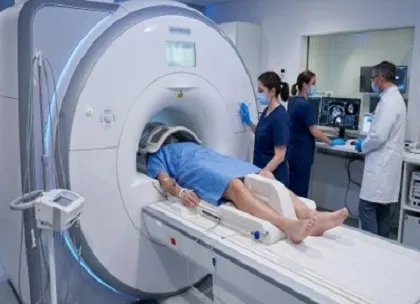
Cardiac magnetic resonance imaging (MRI) may offer a contrast-free option for preprocedural left atrial appendage closure (LAAC) planning, according to a prospective single-center study published in Radiology: Cardiothoracic Imaging. The study evaluated the feasibility of cardiac MRI and compared its measurements with transesophageal echocardiography (TEE) and cardiac computed tomography angiography (CCTA).
Patients with nonvalvular atrial fibrillation (AF) considered suitable for LAAC between October 2019 and July 2023 were included. Participants underwent TEE and cardiac MRI to assess left atrial appendage (LAA) ostium diameter and depth at four angles (0°, 45°, 90°, and 135°). Participants were stratified by renal function: chronic kidney disease (CKD; estimated glomerular filtration rate [eGFR] <60 mL/min/1.73 m²) or non-CKD (eGFR ≥60 mL/min/1.73 m²). A subgroup also underwent CCTA. Correlation and agreement were evaluated using Pearson correlation coefficients and Bland-Altman analyses.
A total of 108 participants were analyzed (mean age 76.5 ± 7.8 years; 77 were male), including 79 with CKD and 29 without CKD. LAA ostium diameter measurements derived from MRI and TEE showed moderate-to-strong correlation (r=0.530–0.737), regardless of CKD status. LAA depth measurements showed weaker correlation, with TEE consistently yielding lower values. Agreement between MRI- and TEE-derived measurements across LAA morphology subtypes was poor.
Among the subgroup who also underwent CCTA (n=40), MRI-derived ostium diameter measurements showed strong correlation with CCTA-derived measurements (r=0.60–0.82) without systematic bias.
These findings suggest cardiac MRI may be a reliable contrast-free alternative to TEE and CCTA for LAAC planning, with measurement performance unaffected by renal function.