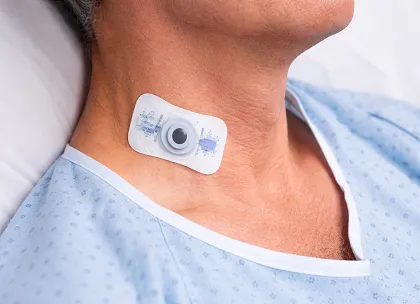
Continuous noninvasive hemodynamic monitoring is increasingly explored in perioperative care. This study published in the European Journal of Medical Research evaluated whether carotid minute distance (cMD), derived from a hands-free continuous wave Doppler patch applied to the common carotid artery (CCA), was associated with directional changes in cardiac output (CO) in cardiac surgery patients.
Patients undergoing cardiac surgery with pulmonary artery catheter or transpulmonary thermodilution monitoring were enrolled. Cardiac output was measured using pulmonary artery catheter–based thermodilution or transpulmonary thermodilution, which served as the reference methods. cMD was calculated as the product of heart rate and velocity time integral. Directional changes in CO were induced using passive leg raising (PLR) or a dobutamine challenge. Concordance between percentage changes in cMD and invasive CO was evaluated using four-quadrant plot analysis.
A total of 41 patients were included, generating 82 paired measurements of invasive CO and cMD during PLR or dobutamine testing. After PLR, CO increased from 5.3 ± 1.1 to 5.7 ± 1.3 L/min (p < 0.001). Dobutamine administration increased CO from 5.3 ± 1.1 to 6.0 ± 1.3 L/min (p<0.001). Compared with baseline, cMD significantly increased after both PLR and dobutamine.
Concordance between percentage changes in CO and cMD was 98.5%, with a coefficient of determination (R²) of 0.58 (p < 0.001).
In cardiac surgery patients, cMD measured by a hands-free Doppler system demonstrated high concordance with directional changes in CO.