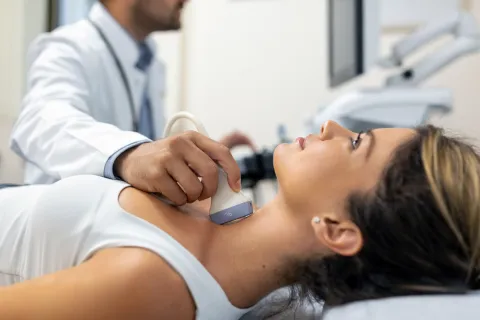
Cerebral infarction remains a serious complication in patients with type 2 diabetes mellitus (T2DM), highlighting the need for tools that can identify patients at higher risk before clinical events occur. Carotid ultrasonography and routine laboratory indicators are frequently used in cardiovascular risk evaluation, but their combined predictive value for cerebral infarction in T2DM has not been fully defined. A study published in Frontiers in Clinical Diabetes and Healthcare evaluated whether carotid ultrasound findings combined with laboratory indicators could help identify individuals with T2DM at higher risk for cerebral infarction. The analysis also evaluated key risk factors and developed a predictive nomogram model.
The study enrolled 300 individuals with T2DM from the First Affiliated Hospital of Anhui University of Science and Technology, including 150 patients with cerebral infarction and 150 without cerebral infarction. All participants underwent carotid ultrasonography and routine blood testing. Variables were compared between groups, and logistic regression analysis was applied to identify factors linked with cerebral infarction. A nomogram prediction model was constructed using these data and subsequently evaluated using a separate validation cohort of 120 individuals with T2DM.
Significant differences were observed between groups in the presence of unstable carotid plaques, degree of carotid stenosis, fasting blood glucose (FBG), low-density lipoprotein cholesterol (LDL-C), and serum uric acid (SUA) (P <0.05). Logistic regression identified these variables as independent risk factors for cerebral infarction in T2DM. The nomogram model demonstrated an area under the curve (AUC) of 0.85 in the training set, with calibration analysis showing consistency between predicted and observed values. In the independent validation cohort, the model achieved an AUC of 0.82, with calibration curves and decision curve analysis indicating stable performance.
These findings indicate that a predictive model incorporating carotid ultrasound features and metabolic laboratory indicators may help identify individuals with T2DM at higher risk of cerebral infarction.