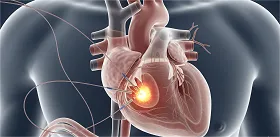
Catheter ablation was significantly more effective than lifestyle modification combined with antiarrhythmic drugs (AADs) in maintaining freedom from atrial fibrillation in obese patients, according to results from a multicenter noninferiority trial published in the Journal of the American College of Cardiology.
The study included 212 patients with paroxysmal or persistent AF and a body mass index (BMI) between 30 and 40 kg/m². The researchers randomized the patients to receive either catheter ablation (CA) or a program of weight loss and exercise combined with AADs. The primary outcome was AF freedom over 12 months. The outcomes were assessed with repeated Holter monitoring.
At one year, AF freedom was achieved in 73% of patients in the CA group compared with 34.6% in the combination group. Although lifestyle modification led to greater weight loss and improvements in metabolic markers such as HbA1c, it did not reach the rhythm control effectiveness of ablation.