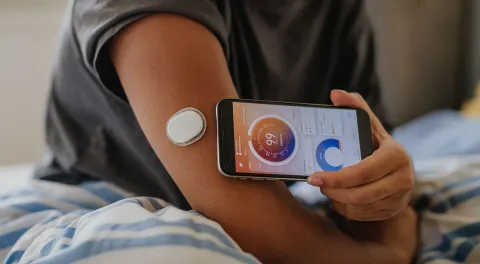
Accurate glucose monitoring during hypoglycemia is essential for patient safety and clinical assessment. In Diabetes, Obesity and Metabolism, a clinical accuracy study evaluated continuous glucose monitoring (CGM) performance within the hypoglycemic range across different clinical hypoglycemia scenarios.
The analysis included 92 individuals with hypoglycemia. This comprised 63 individuals undergoing insulin tolerance testing (ITT), 16 individuals with insulinoma, and 13 individuals with diabetes receiving subcutaneous insulin therapy. CGM accuracy was assessed using 464 paired CGM and point-of-care (POC) glucose measurements. Of these values, 39.7% represented level 1 hypoglycemia and 60.3% represented level 2 hypoglycemia. Accuracy metrics included mean absolute relative difference (MARD), the percentage of glucose values within ±20 mg/dL of POC glucose (%20/20), diabetes technology society error grid analysis, and Bland-Altman analysis (BAA).
CGM accuracy differed across clinical settings. Performance was highest in people with diabetes receiving insulin therapy, with a MARD of 13.9% and %20/20 of 81.5%. Accuracy declined in individuals undergoing ITT, with a MARD of 50.8% and %20/20 of 67.5% (P < 0.01 and P = 0.02, respectively). CGM accuracy decreased significantly with higher glucose rates of change. The proportion of CGM values with moderate risk of failing to detect potentially dangerous hypoglycemia increased from 1.5% in people with diabetes and 1.2% in insulinoma to 14.2% during ITT (P < 0.01). Bland–Altman analysis showed increasing negative bias from −3.3 ± 10.7 mg/dL in people with diabetes to −15.2 ± 13.6 mg/dL during ITT (P < 0.01).
These findings indicate that CGM accuracy varies by hypoglycemic conditions and is reduced during ITT.