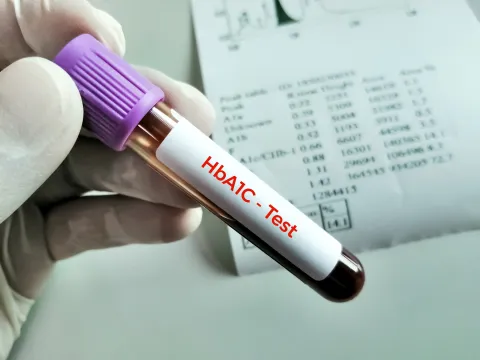
Managing cystic fibrosis-related diabetes (CFRD) remains challenging because glycemic instability can add to an already high treatment burden. A prospective single-arm study published in Diabetes Research and Clinical Practice found that 3 months of continuous glucose monitoring (CGM) use improved glycemic control and quality of life without increasing hypoglycemia in insulin-treated patients with CFRD.
The trial enrolled 19 participants who used a real-time CGM system for 3 months. Outcomes were assessed at baseline, at the end of the intervention, and again 3 months after completion. Glycemic control was evaluated using glycated hemoglobin (HbA1c) and CGM metrics, while quality of life was measured using the Problem Areas in Diabetes (PAID) questionnaire.
Median baseline HbA1c was 8.7% (72 mmol/mol) and declined to 7.8% (62 mmol/mol) at study completion (P=0.018). HbA1c remained lower than baseline at 8.0% (64 mmol/mol) 3 months after the intervention ended. Median PAID score improved from 29.0 at baseline to 16.0 at completion (P=0.02), with partial persistence at follow-up at 19.0.
Time spent below 3.0 mmol/L did not significantly increase before versus after sensor use (0.0% vs 0.3%; P=0.50). These findings suggest CGM may offer a practical strategy to improve metabolic control and treatment experience in patients with CFRD.