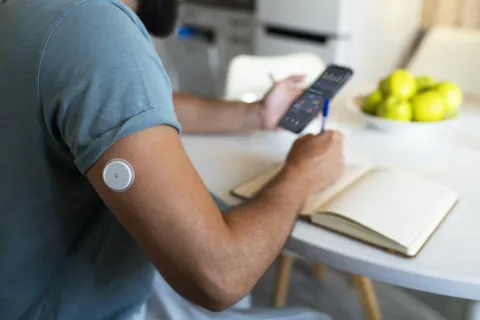
Continuous glucose monitoring (CGM) combined with remote patient monitoring (RPM) may offer meaningful long-term value in children with type 1 diabetes mellitus (T1DM). A modeling analysis published in Diabetes Care evaluated whether adding RPM to CGM improves health outcomes and cost-effectiveness compared with self-monitoring of blood glucose (SMBG) and CGM alone.
This Markov model simulated disease progression in a cohort of 5-year-old patients with T1DM across 20-year, 50-year, and lifetime horizons. The model tracked acute complications, including diabetic ketoacidosis (DKA) and severe hypoglycemia (SH), along with seven chronic complications such as retinopathy, nephropathy, cardiovascular disease, and end-stage renal disease. Clinical efficacy inputs were derived from meta-analyses of pediatric CGM studies and the Teamwork, Targets, Technology, and Tight Glycemia (4T) Study.
Over 20 years, CGM increased quality-adjusted life years (QALYs) by 0.09 compared with SMBG, with an additional cost of $8,900. CGM with RPM increased QALYs by 0.37 compared with SMBG, with an added cost of $10,300. When compared directly with CGM alone, CGM with RPM demonstrated a lower incremental cost-effectiveness ratio ($27,400/QALY vs $103,700/QALY), indicating greater economic value. These findings remained consistent across multiple sensitivity analyses and extended time horizons.
The analysis also showed that CGM with RPM remained cost-effective even when achieving at least 30% of the clinical efficacy observed in the 4T study. While upfront costs were higher, reductions in complication-related costs contributed to improved long-term economic outcomes. These findings show that CGM with RPM is associated with better outcomes and favorable cost-effectiveness vs SMBG and CGM alone in pediatric T1DM.