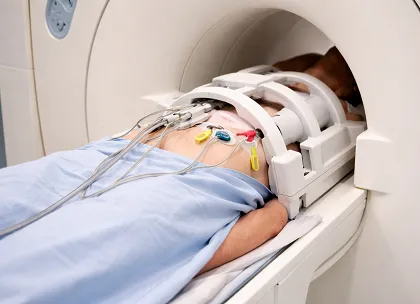
Right atrial pressure (RAP) reflects disease severity in severe tricuspid regurgitation (TR), but noninvasive estimation remains difficult. A single-center study published in Journal of Cardiovascular Magnetic Resonance evaluated cardiac magnetic resonance (CMR) imaging parameters for estimating right atrial pressure (RAP) in patients with severe TR. Between September 2021 and January 2026, 47 consecutive patients with severe TR who underwent both cardiac catheterization and CMR were enrolled.
Mean RAP was obtained through cardiac catheterization, while CMR measured volumetric parameters and myocardial strain indices. Right ventricular (RV) and right atrial (RA) strain measurements were derived from apical four-chamber CMR images.
The median patient age was 69 years, and secondary TR represented the predominant etiology (83.0%). Mean RAP measured invasively was 10.0 mmHg, and the median interval between catheterization and CMR was 1 day. Among volumetric indices, indexed RV end-diastolic volume (RVEDVi; r=0.58, p<0.001), indexed RV end-systolic volume (r=0.55, p<0.001), and indexed RA end-systolic area (r=0.33, p=0.024) were significantly associated with RAP. Functional parameters including RV ejection fraction and RV longitudinal strain showed no significant association.
However, RA longitudinal strain (r=−0.59, p<0.001) and RA radial strain (r=−0.48, p<0.001) demonstrated significant correlations. In multivariable analysis, RVEDVi and RA longitudinal strain remained independently associated with RAP. Receiver operating characteristic analysis showed area under the curve values of 0.78 for RVEDVi and 0.82 for RA longitudinal strain for identifying mean RAP greater than 10 mmHg.
These findings show that selected CMR-derived volumetric and strain parameters were correlated with invasively measured RAP in patients with severe TR.