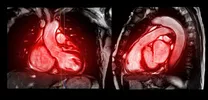
Researchers from the Kerckhoff Heart and Thorax Center, Germany, presented new findings at the ESC 2025 Congress showing that cardiac magnetic resonance (CMR)-derived T1 and T2 mapping significantly improve prognostic assessment in patients with diabetes mellitus (DM).
Diabetes is strongly linked with adverse cardiovascular outcomes due to myocardial inflammation and fibrosis. While CMR already provides advanced imaging of cardiac structure and function, its role in refining prognosis in diabetes had not been fully clarified.
The study analyzed 3,868 patients undergoing CMR, including 708 (18.3%) with diabetes. After adjusting for baseline differences in left ventricular ejection fraction, end-systolic volume index, and scar burden by late gadolinium enhancement (LGE), DM patients showed:
- Higher native T1 values (1142 ± 69 ms vs. 1132 ± 62 ms, p<0.001), suggesting more myocardial fibrosis.
- Slightly elevated T2 times (p=0.032), consistent with low-grade inflammation.
- Worse global longitudinal strain (GLS) (-13.5 ± 5.1% vs. -15.9 ± 5.0%, p<0.001).
- Increased myocardial mass compared with non-diabetic counterparts.
During one-year follow-up, multivariable analysis revealed that T1 (HR 1.004, p=0.0179), GLS (HR 1.081, p=0.011), and diabetes itself (HR 2.581, p=0.002) were independent predictors of the combined endpoint of all-cause mortality and heart failure hospitalization. Importantly, both T1 and GLS significantly improved the predictive power of baseline risk models, providing incremental prognostic value.
The findings highlight the role of advanced imaging in managing diabetic patients, underlining how tissue characterization and functional strain analysis could guide preventive strategies and improve long-term outcomes.