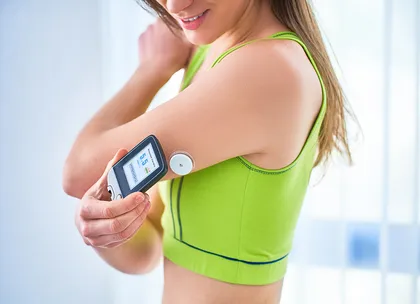
Automated insulin delivery (AID) systems are increasingly used to support glycemic management in youth with type 1 diabetes mellitus (T1DM), although comparative long-term real-world data between commercially available systems remain limited. A study published in Diabetes Technology & Therapeutics compared glycemic outcomes and user engagement patterns between two widely used AID systems in clinical practice.
The analysis included 722 youth aged 6–18 years with T1DM from a large academic center who initiated one of two commercially available AID systems between January 2020 and June 2024. Continuous glucose monitor (CGM) and AID metrics were collected at baseline and at 3, 6, 12, and 18 months following device initiation.
Findings
- All AID users showed improvement in time in range (TIR) greater than 9.9% across all evaluated time points.
- One group showed larger early TIR improvements at 3 months (+14.9%) and 6 months (+13.3%) compared with the comparator group (+10.0% and +10.2%, respectively).
- Differences in TIR narrowed over time, with 18-month changes reaching +9.9% in one group and +10.6% in the other.
- Carbohydrate entry declined over time in one group, from 199 g at 3 months to 173 g at 18 months.
- Carbohydrate entry remained relatively stable in the comparator group, ranging from 177 g to 181 g across evaluated time points.
Both AID systems were associated with sustained improvements in glycemic outcomes over 18 months in youth with T1DM. User engagement patterns differed between systems over time, particularly with respect to carbohydrate entry behavior.