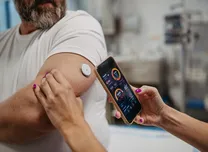
Adverse glycemic events increase the risk for poor outcomes in hospitalized adults with type 1 diabetes mellitus (T1DM). A recent multicenter retrospective analysis published in the Journal of Diabetes Science and Technology demonstrated that CGM offers faster and more comprehensive event detection compared with POC.
The study included non-critically ill adults with type 1 diabetes who continued wearing CGM during ward-based care while also receiving standard POC glucose monitoring. Hypoglycemia was defined as less than 70 mg/dL, and hyperglycemia was defined as greater than 180 mg/dL.
The analysis assessed 253 admissions and evaluated 127,837 CGM measurements and 5,508 POC measurements. CGM identified 1,391 hyperglycemia events and 317 hypoglycemia events. Among events detected by both methods, CGM identified hyperglycemia 70 minutes earlier (interquartile range [IQR] 22 to 166 minutes) at 187 mg/dL compared with 223 mg/dL using POC (P < .0001). CGM identified hypoglycemia 38 minutes earlier (IQR 14 to 65 minutes) at 67 mg/dL compared with 56 mg/dL using POC (P < .0001).
Point-of-care testing failed to detect 25% of adverse glycemic events identified by CGM, while CGM missed only 3% of events identified by POC.
These findings indicate that continuous glucose monitoring may support safer inpatient diabetes management by enabling earlier recognition of clinically significant glycemic disturbances.