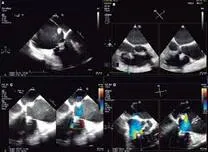
Correcting the PISA method improves accuracy in assessing TR severity. A study published in European Heart Journal – Cardiovascular Imaging evaluated whether adjustments for flow, leaflet angle, and regurgitant orifice ellipticity reduce underestimation of effective regurgitant orifice area (EROA).
The analysis included 100 patients with at least mild TR on transthoracic echocardiography. EROA determined by traditional PISA (EROA-PISA) was compared with corrected PISA (EROA-Corrected), quantitative Doppler (EROA-Doppler), and 3D-VCA.
EROA-PISA (0.62 ± 0.47 cm²) significantly underestimated TR severity compared with EROA-Doppler (1.40 ± 1.11 cm²) and 3D-VCA (1.66 ± 1.18 cm²). EROA-Corrected (1.31 ± 1.19 cm²) reduced this underestimation and showed higher agreement with both quantitative methods. EROA-Corrected ≥0.75 cm² independently predicted morbidity and mortality on multivariate analysis (HR 2.00; 95% CI 1.10–3.90; p = 0.04). EROA-Doppler and 3D-VCA ≥0.75 cm² were also associated with worse outcomes.
These findings show that correcting PISA for flow and geometric parameters increases accuracy and provides a more reliable assessment of TR severity