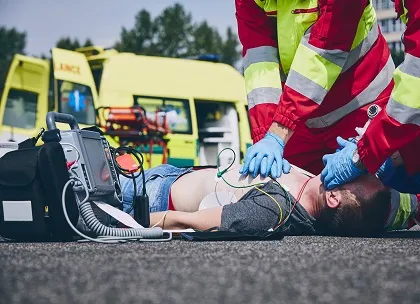
Cardiovascular diseases, particularly acute myocardial infarction (AMI), represent a substantial global health burden and are highly prevalent in Syria. Early recognition of myocardial infarction symptoms and timely, high-quality basic life support (BLS) are essential competencies for graduating medical students. To evaluate these competencies, a confidential online cross-sectional survey was conducted between 13 and 30 June 2025 among undergraduate medical students from nine Syrian medical schools. The Google Forms questionnaire required sign-in to ensure a single response per participant. The study was published in BMC Medical Education.
Among 500 respondents (54.0% female), CPR knowledge was assessed using an 11-item guideline-mapped composite score (range 0-11), and MI symptom knowledge using an 18-item score (range 0–18), with one point per correct response. The mean CPR score was 5.03 (SD 2.50), and the mean MI knowledge score was 11.50 (SD 2.67).
Notable CPR knowledge gaps involved time-critical defibrillation concepts, including when to use an automated external defibrillator (18.6% correct), monophasic defibrillation energy (35.4%), and recommended reassessment interval (36.8%). In adjusted analyses, higher CPR scores were observed among clinical-year students (adjusted B 1.66; 95% CI 1.10–2.22) and students attending public versus private universities (adjusted B 1.07; 95% CI 0.62–1.51).
Syrian medical students demonstrated important gaps in guideline-critical CPR knowledge and variable MI symptom recognition. Structured early BLS/AED training reinforced through simulation and competency-based assessment may help address these deficits.