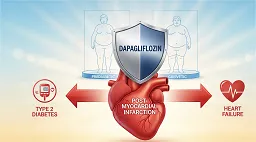
A new analysis from the DAPA-MI trial has found that dapagliflozin significantly reduces the risk of new-onset type 2 diabetes and heart failure symptoms in patients without a prior diagnosis of diabetes following myocardial infarction (MI), especially among those with prediabetes and higher body mass index (BMI). The analysis was published in Journal of the American Heart Association.
The trial excluded participants who had a diagnosis of type 2 diabetes, missing baseline hemoglobin A1c data, or who were not treated with the study drug. Of the 4017 participants in the original DAPA-MI trial, 3425 patients were included in this substudy. They were stratified based on glycemic status i.e., normoglycemia (HbA1c <5.7%) or prediabetes (HbA1c 5.7 to <6.5%), and BMI (<25, 25 to <30, and ≥30 kg/m²).
Among 1926 patients with normoglycemia at baseline, new-onset diabetes occurred in 0.6% of those treated with dapagliflozin compared to 1.6% in the placebo group (Hazard ratio of 0.40 suggesting risk reduction).
In the 1499 patients with prediabetes, new-onset diabetes occurred in 10.1% of dapagliflozin-treated individuals compared to 13.1% with placebo (hazard ratio: 0.7). The interaction between glycemic category and treatment effect was not statistically significant (P interaction = 0.23).
The protective effect of dapagliflozin was especially high in those with both prediabetes and a BMI of ≥30 kg/m², where the 1-year absolute risk reduction for new-onset diabetes was 8.1%. Dapagliflozin was effective in reducing the progression of heart failure symptoms.
The incidence of New York Heart Association (NYHA) class III–IV symptoms was lower in those receiving dapagliflozin, particularly among the prediabetes group (P interaction = 0.009). Among patients with both prediabetes and a BMI ≥30, the absolute risk reduction for NYHA class III–IV symptoms was 10.0% at 1 year.