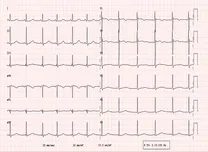
Prolongation of the QT interval is strongly linked to higher short-term mortality, particularly in intensive care settings where such abnormalities are common. This study, presented at ESC Congress 2025, developed a deep learning model to predict mortality risk using the 12-lead electrocardiogram in patients with QTc prolongation.
Data from the MIMIC-IV database were analysed, focusing on ECGs with QTc ≥440 ms. Patients who died within 1, 3, or 12 months after the ECG were labelled as positive cases, with balanced sampling to ensure comparability. The model was trained using five-fold cross-validation and tested on a held-out dataset.
Restricted cubic spline analysis confirmed a U-shaped relationship between QTc interval and mortality risk, with hazard ratios rising above 1 when QTc exceeded 446.3 ms. The model achieved AUROCs of 0.852, 0.834, and 0.815 for 1-, 3-, and 12-month mortality predictions, respectively.
Compared to SAPS-II, the model improved risk classification as indicated by significant net reclassification and integrated discrimination indices. These findings suggest that deep learning analysis of ECGs can effectively identify ICU patients at high risk of short-term mortality, offering a promising tool for early intervention and clinical prioritization.