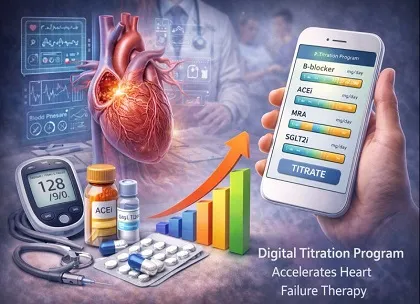
Less than one-third of heart failure patients with reduced ejection fraction receive guideline-directed medical therapy at target doses due to logistical barriers, clinical inertia, and safety concerns during uptitration.
AIM-POWER investigators conducted multicenter open-label randomized clinical trial enrolling 122 participants across 21 United States sites who demonstrated sub-optimal pharmacological optimization despite chronic heart failure management. The results were published in the Circulation: Heart Failure.
Remote BiovitalsHF Platform Drives Protocolized Uptitration
Intervention arm participants performed daily weight assessments alongside twice-daily blood pressure and heart rate measurements transmitted through BiovitalsHF digital platform generating automated titration recommendations delivered biweekly to site clinicians based on prespecified hemodynamic thresholds and safety parameters. This outpatient guidance facilitated rapid progression through protocol-driven dose escalation while mitigating risks of hypotension, hyperkalemia, and acute decompensation characteristic of clinic-based titration attempts. Control group continued standard care titration at scheduled outpatient encounters without remote physiologic data integration.
Superior Therapy Score Improvement Achieved
Ninety-day primary endpoint analysis established highly significant between-group difference favoring intervention with mean optimal therapy score increase of 1.72 versus 0.44 in usual care arm alongside P-value less than 0.001 confirming robust clinical effect size. Participants averaged 61.6 years chronological age with 69% male representation mirroring real-world heart failure demographics while maintaining adequate statistical power through pragmatic multicenter design.
Safety Profile Supports Broad Implementation
Digital intervention demonstrated excellent tolerability without excess adverse events beyond expected class effects of uptitrated neurohormonal antagonists, establishing feasibility for frontline cardiology deployment. Remote monitoring eliminated requirement for additional clinic visits while enhancing clinician confidence through objective hemodynamic trends preceding dose adjustments.
Transforming Heart Failure Care Delivery Models
Cardiology practices gain scalable solution addressing implementation gap through integration of remote physiologic analytics with electronic health record titration protocols, positioning digital therapeutics as standard adjunct to quadruple therapy optimization paradigms.