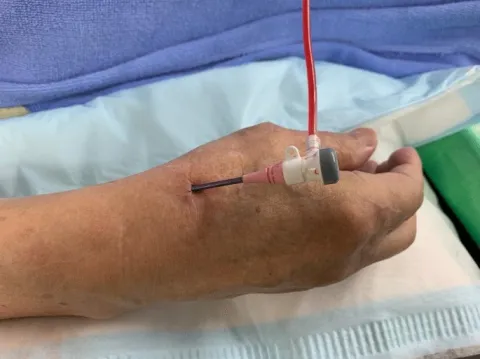
Access-site crossover remains a key determinant of procedural safety in percutaneous coronary intervention. In the International Journal of Cardiology, a systematic review and meta-analysis evaluated crossover patterns and temporal trends of distal radial access compared with transradial access in randomized controlled trials.
The analysis included 20 randomized controlled trials enrolling 8,868 patients, with 4,414 assigned to distal radial access and 4,454 to transradial access. The primary outcome was total crossover to another access site. Outcomes were stratified by study era defined as trials conducted up to versus after the DISCO RADIAL trial. Secondary outcomes included crossover to femoral access and switches to another radial access. Both frequentist and Bayesian meta-analyses were performed.
Overall crossover occurred more frequently with distal radial access than with transradial access, with an odds ratio of 2.78 (95% confidence interval 1.94 to 3.98). However, crossover risk declined in later trials, with the odds ratio decreasing from 4.23 in earlier studies to 2.14 after DISCO RADIAL. Among patients who experienced crossover, distal radial access was associated with a lower risk of conversion to femoral access (odds ratio 0.33; 95% confidence interval 0.19 to 0.59). Most crossovers in the distal radial group were redirected to an alternative radial access site.
These findings indicate that although distal radial access is associated with higher crossover rates, crossover more often remains within radial access and less frequently requires femoral conversion.