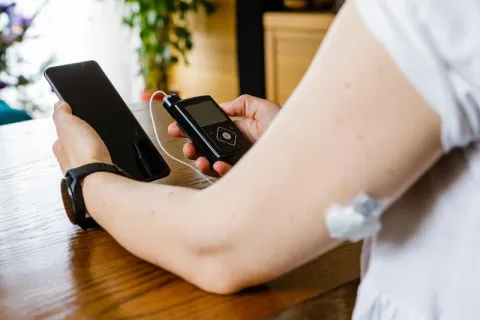
Can the addition of glucagon to automated insulin therapy reduce hypoglycemia during metabolic stress? A randomized, 33-hour crossover inpatient study published in Diabetes, Obesity and Metabolism evaluated an automated insulin–glucagon delivery (AIGD) system compared with an automated insulin delivery (AID) system in 13 adults with type 1 diabetes mellitus (T1DM).
Each participant used both systems during separate study periods that included two overnight stays and structured challenges: 50% of the calculated insulin bolus for breakfast, 100% bolus for lunch, 130% bolus for dinner, and a 45-minute unannounced bicycle exercise at 50% VO₂max. Co-primary endpoints were the number of 15-g carbohydrate treatments for plasma glucose <3.0 mmol/L and the percentage of time below 3.9 mmol/L.
The dual-hormone system required fewer carbohydrate interventions than insulin-only automation (15 vs 20; p = 0.02). Percent time below 3.9 mmol/L was similar between systems (3.7 ± 2.5% vs 3.9 ± 3.1%; p = 0.49). Time in range 3.9-10.0 mmol/L (68.8 ± 14.9% vs 66.9 ± 10.2%; p = 0.41) and time above 10.0 mmol/L (27.5 ± 14.8% vs 29.2 ± 10.4%; p = 0.46) were also comparable. Mean glucose and coefficient of variation did not differ (p = 0.30).
Post hoc analysis showed higher time-in-range during the 0-3 hours after exercise and fewer hypoglycemia events (<3.9 mmol/L) during the 0-3 hours after meals with the dual-hormone system. Reports of nausea, headache, hunger, and palpitation were similar.
Under these controlled inpatient conditions, automated insulin-glucagon delivery maintained glucose control comparable to insulin-only automation while reducing the need for carbohydrate rescue.