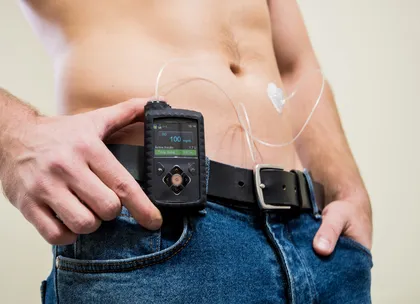
Automated insulin delivery (AID) systems are increasingly used early after type 1 diabetes mellitus (T1DM) diagnosis, but real-world data in this phase remain limited. A retrospective observational analysis published in the Journal of Diabetes Research evaluated the safety and glycemic outcomes of a tubeless AID system initiated within 90 days of diagnosis in youth with T1DM.
The analysis included 74 youths who started AID within 90 days of T1DM diagnosis. Continuous glucose monitoring (CGM) metrics and insulin delivery data were assessed over the first 3 months of use. Participants were stratified by age (<6 years, 6 to <12 years, and 12 to <18 years).
No episodes of diabetic ketoacidosis (DKA) or severe hypoglycemia occurred during follow-up. Median time in automated mode was 97%, with a time-weighted average glucose target of 118.8 mg/dL (6.6 mmol/L). Median glucose management indicator (GMI) was 7.1% (54 mmol/mol), and time in range (70–180 mg/dL) was 72.1%.
Time below range (TBR) remained low, with level 1 TBR (54-69 mg/dL) at 1.0% and level 2 TBR (<54 mg/dL) at 0%. Median total daily insulin varied by age group, with 7.4 units in those aged <6 years, 11.4 units in those aged 6 to <12 years, and 25.7 units in those aged 12 to <18 years, with approximately 45% to 48% delivered as basal insulin.
The findings indicate that early initiation of AID in youth with new-onset T1DM was associated with favorable glycemic metrics and no severe adverse events over 3 months.