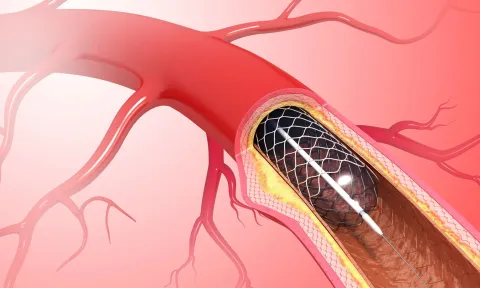
The duration of antiplatelet therapy after percutaneous coronary intervention (PCI) remains an important consideration in patients with acute coronary syndrome (ACS), particularly when balancing ischemic and bleeding risks over time. In European Heart Journal, a prespecified landmark analysis evaluated temporal patterns of ischemic and bleeding events following early aspirin withdrawal after PCI.
The NEO-MINDSET trial was a randomized study that assigned 3,410 patients with ACS undergoing successful PCI with drug-eluting stents (DES) within four days of hospital admission to either potent P2Y12 receptor inhibitor (P2Y12) monotherapy or dual antiplatelet therapy (DAPT) for 12 months. Monotherapy consisted of prasugrel or ticagrelor alone, while DAPT combined aspirin with a potent P2Y12 inhibitor. Co-primary outcomes were a composite ischemic outcome and Bleeding Academic Research Consortium (BARC) type 2, 3, or 5 bleeding.
Within 30 days, the composite ischemic outcome occurred more frequently with monotherapy than with DAPT (3.3% vs 1.8%; risk difference 1.5%, 95% confidence interval 0.4%–2.6%; P=.006), while bleeding occurred less often (0.6% vs 1.5%; P=.018). Between days 31 and 365, ischemic outcomes were similar (3.8% in both groups; P=.977), whereas bleeding remained lower with monotherapy (1.3% vs 3.5%).
This landmark analysis demonstrates an early excess ischemic risk with aspirin withdrawal, with sustained bleeding reduction beyond the first 30 days.