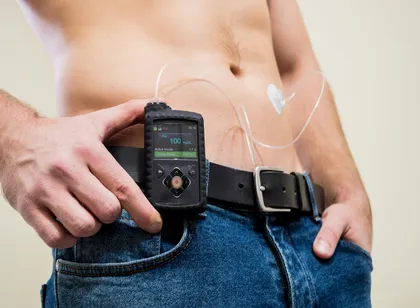
Early intensive diabetes management with automated insulin delivery (AID) may improve glycemic outcomes soon after type 1 diabetes mellitus (T1DM) diagnosis, although long-term durability of these benefits remains uncertain. An extension analysis published in Hormone Research in Paediatrics evaluated glycemic outcomes through 104 weeks in youth previously enrolled in a randomized trial of early intensive AID management.
Participants had initially been randomized shortly after T1DM diagnosis to intensive diabetes management using AID with frequent clinical contact or to standard care using continuous glucose monitoring with injections or insulin pumps without AID. After 52 weeks, all participants could select their preferred insulin delivery modality, and ongoing diabetes management transitioned back to routine clinical care. This analysis evaluated continuous glucose monitoring outcomes during the 52- to 104-week extension period.
Findings
- Thirty-nine participants from the original intensive care group and 30 from the original control group provided continuous glucose monitoring data at 104 weeks.
- During the extension period, mean time in range (TIR) remained stable in the original control group but declined in the original intensive care group from 79% to 67%.
- No significant between-group difference in TIR was observed at 104 weeks (P = 0.72).
- At 104 weeks, 49% of participants from the original intensive care group and 40% of control participants maintained TIR above 70%.
- Time below 54 mg/dL remained below 0.4% in both groups at 104 weeks.
- Mean hemoglobin A1c levels were 6.7% in the original intensive care group and 7.2% in controls at 104 weeks, without significant between-group difference.
The analysis demonstrated that very high TIR achieved with early intensive AID management declined during long-term follow-up after transition to routine clinical care. However, hypoglycemia exposure remained very low in both study groups through 104 weeks.