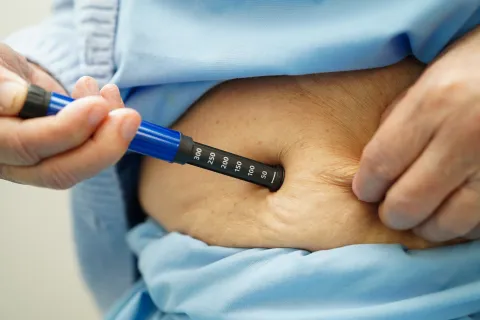
Early changes in metabolic and hepatic parameters may be observed with newer glucose-lowering therapies in routine practice. A retrospective cohort study published in the International Journal of Diabetes in Developing Countries evaluated metabolic and hepatic outcomes over 4 months in adults with type 2 diabetes mellitus (T2DM) treated with tirzepatide.
The study included 132 adults with T2DM who initiated tirzepatide. Anthropometric, glycaemic, lipid, and hepatic parameters were assessed at baseline and at 4 months. Hepatic markers included aminotransferases, gamma-glutamyl transferase (GGT), and fibrosis-4 (FIB-4) index. Patients receiving dipeptidyl peptidase-4 inhibitors were excluded. Paired two-tailed t-tests were used for comparisons.
At 4 months, mean weight decreased by 9.8 kg (−10.6%) and HbA1c by 1.05% (both p < 0.001). LDL cholesterol decreased by 14.2 mg/dL (−11.8%) and triglycerides by 27.6 mg/dL (−15.4%) (both p < 0.001). Hepatic parameters showed reductions in AST (−15.5%), ALT (−16.4%), and GGT (−20.3%), along with a decrease in FIB-4 score (−0.24; −16.9%; p = 0.003).
A reduction in fibrosis risk category was observed in 38% of participants. Overall, tirzepatide was associated with improvements in metabolic and hepatic parameters over 4 months in adults with T2DM.