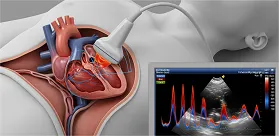
A large study has demonstrated that echocardiographic estimates of pulmonary capillary wedge pressure (ePCWP) provide significant prognostic information in patients with chronic heart failure (HF) and reduced or mildly reduced ejection fraction compared to traditional echocardiographic parameters. The results of the study were reported in the Journal of the American Society of Echocardiography.
Researchers assessed 2,214 outpatients with HF and left ventricular ejection fraction (LVEF) below 50%. The median follow-up was nearly three years. Elevated ePCWP (>15 mm Hg) was reported in more than 50% of the patients, while elevated ePVR (>2 Wood units) was found in about 25% of patients. Patients with higher ePCWP were generally older, had more advanced symptoms, greater cardiac remodeling, and worse systolic and diastolic function, especially when ePVR was also elevated.
Both ePCWP and ePVR were associated with increased risk of all-cause death or HF hospitalization; however, adjusted analysis revealed that only ePCWP independently predicted outcomes. Each 1 mm Hg rise in ePCWP was associated with a 3% higher risk of adverse events.