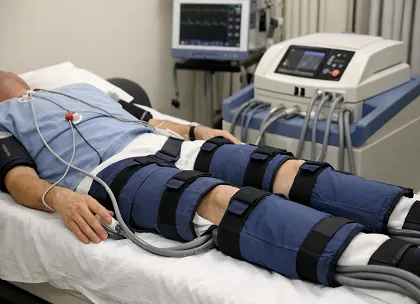
Enhanced external counterpulsation (EECP) is a non-invasive therapy shown to improve cardiac function and hemodynamic characteristics in conditions such as refractory angina and chronic heart failure. However, evidence regarding its impact on long-term outcomes in acute coronary syndrome (ACS) remains limited. A retrospective controlled study published in the Frontiers of Cardiovascular Medicine evaluated the association between EECP therapy and major adverse cardiovascular events (MACE) in patients with ACS undergoing interventional treatment.
Between January 2020 and June 2022, 798 patients with ACS who met predefined inclusion and exclusion criteria were included and categorized according to treatment exposure into a no-EECP group (n=583) and an EECP group (n=215). The primary endpoint was the first occurrence of MACE, defined as all-cause death, coronary revascularization, recurrent angina, non-fatal myocardial infarction (MI), or stroke, during a median follow-up of 16.4 months. Repeat coronary angiography one year after discharge was performed in 245 patients (30.7%).
Compared with the no-EECP group, the EECP group showed a lower proportion of circumflex artery as the culprit vessel (44.1% vs 23.7%; p=0.001), lower prevalence of multivessel coronary artery disease (38.7% vs 18.6%; p=0.002), and lower Gensini scores (p < 0.001). During follow-up, the first MACE occurred more frequently in the no-EECP group than in the EECP group (19.9% vs 7.9%; HR 0.81; 95% CI 0.74-0.87; p < 0.001). Lower incidences of recurrent angina (7.0% vs 2.8%; HR 0.83; 95% CI 0.74-0.93; p = 0.024) and coronary revascularization (7.5% vs 3.3%; HR 0.84; 95% CI 0.74–0.94; p = 0.028) were observed with EECP, while no significant differences were reported for all-cause death, recurrent MI, or stroke.
EECP therapy was associated with lower MACE incidence, with lower incidences of recurrent angina and coronary revascularization contributing to the observed difference. Prospective randomized trials are required to validate these findings.