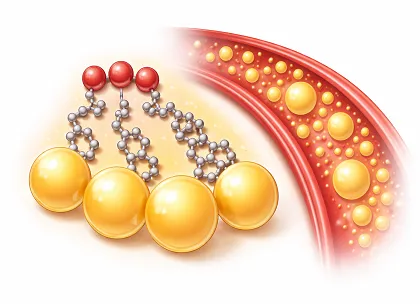
GLP-1 receptor agonists improve dyslipidemia and cut CV risk in type 2 diabetes (T2D). The role of endogenous GLP-1 in lipid metabolism is unclear. Researchers tested DPP-4 inhibition with vildagliptin on plasma triglyceride (TG) response to intraduodenal lipid and a mixed meal. They also checked GLP-1 receptor blockade with exendin(9-39) in T2D. The study was published in the Diabetes.
Fifteen T2D participants on diet or metformin joined a double-blind, randomized crossover study. They attended three times. Vildagliptin (50 mg) or placebo was given orally at t=-60 min. Intravenous exendin(9-39) ran from t=-60 to 150 min on one vildagliptin day; saline on others. Lipid emulsion infused intraduodenally (2 kcal/min, t=0-120 min), then a mixed meal (t=120-150 min). TGs measured via liquid chromatography-tandem mass spectrometry.
Plasma TG levels rose after lipid and meal. Most matched the emulsion's species. Vildagliptin cut TG(54:4) and TG(54:5) concentrations (each P<0.01), without changing total TGs. GLP-1 blockade during vildagliptin raised total TGs (P<0.001). This linked to rises in 10 individual TG species (P<0.05 each).
These results show endogenous GLP-1 helps modulate postprandial TG appearance in T2D. Findings from this small crossover trial suggest a physiological role, warranting larger studies for confirmation.