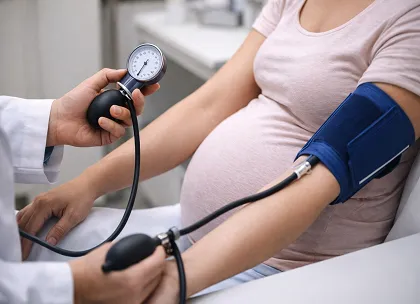
Effective blood pressure control during pregnancy remains important to reduce maternal and fetal complications associated with gestational hypertension (GHT). Comparative evidence evaluating combination antihypertensive regimens during pregnancy remains limited. A randomized study presented at the ESH Congress 2026 evaluated the effectiveness of two antihypertensive combinations in pregnant women with GHT diagnosed according to the 2018 European Society of Cardiology guidelines.
The study included 60 pregnant women who were randomly assigned to receive methyldopa (500-1000 mg) plus metoprolol (50 mg) or methyldopa (500-1000 mg) plus amlodipine (5 mg). Blood pressure monitoring and dose titration were performed throughout pregnancy, including assessments at 26–28, 30–32, 34–36, and 36–38 weeks of gestation. Ambulatory blood pressure monitoring and fetal Doppler ultrasonography were also performed.
Findings
- Both treatment regimens were associated with significant reductions in office systolic blood pressure (SBP), diastolic blood pressure (DBP), and mean blood pressure from baseline (p=0.0001).
- The percentage reduction in SBP was greater with methyldopa plus amlodipine than with methyldopa plus metoprolol (p=0.0116).
- A greater reduction in DBP was also observed with the amlodipine-based regimen (p=0.0123).
- Changes in mean BP did not differ significantly between treatment groups (p=0.3454).
- Target SBP levels were achieved in 75% of patients receiving methyldopa plus metoprolol and 87% receiving methyldopa plus amlodipine (p=0.32).
- Target DBP levels were achieved in 75% and 91% of patients, respectively (p=0.15).
The findings suggest that both antihypertensive combinations were effective in achieving blood pressure control in women with gestational hypertension.