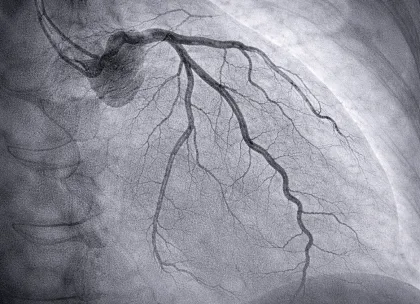
Severely calcified coronary lesions continue to complicate percutaneous coronary intervention (PCI) by limiting adequate lesion preparation and optimal stent expansion. The SHINE-IVL study presented at EuroPCR 2026 evaluated the safety and effectiveness of intravascular lithotripsy (IVL)-facilitated PCI in a real-world Indian cohort with complex calcified coronary lesions.
The single-center observational study included 150 consecutive patients who underwent IVL-assisted PCI between February 2020 and March 2025. All treated lesions showed severe calcification based on angiographic or intravascular imaging findings. The cohort included complex lesion subsets such as left main disease, bifurcation lesions, in-stent restenosis, and total occlusions.
Findings
- A total of 180 severely calcified coronary lesions were treated, including left main lesions (21.2%), total occlusions (30.7%), bifurcation lesions (30%), and in-stent restenosis (11.3%).
- Overall procedural success with residual stenosis <30% and final TIMI III flow was achieved in 99.3% of the cohort.
- Procedural success rates remained high in complex lesion subsets, including 94.2% for in-stent restenosis lesions and 91.3% for total occlusions.
- The overall complication rate was 15.3%, including dissections (5.3%), transient slow-flow/no-reflow (7.3%), perforations (1.3%), and subacute stent thrombosis (1.3%), and all complications were managed successfully.
- MACE rates were 8.0% at 30 days, 10.6% at 6 months, and 12.0% at 1 year.
The analysis suggests that IVL-facilitated PCI may provide a safe and effective calcium-modifying approach for complex coronary interventions in routine clinical practice, including high-risk calcified lesions in older patients with multiple comorbidities.