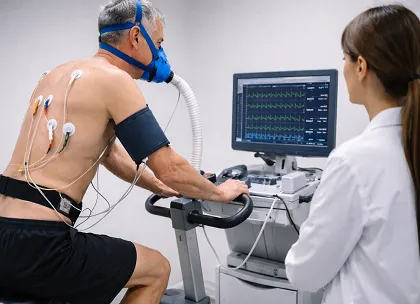
Peak oxygen consumption (pVO₂) is a recognized predictor of mortality and morbidity in heart failure with reduced ejection fraction (HFrEF). This prospective study published in the International Journal of Cardiology assessed changes in cardiorespiratory fitness following structured initiation of guideline-directed medical therapy (GDMT) in patients with new-onset HFrEF.
Between December 2022 and September 2023, 48 patients were enrolled from a heart failure outpatient clinic. Participants had newly diagnosed HFrEF and underwent at least 12 weeks of GDMT initiation and optimization, including physical training and education. Cardiopulmonary exercise testing, echocardiography, medication review, and clinical assessments were performed at baseline and at 12 weeks. Associations with changes in pVO₂ were examined using univariable and multivariable regression analyses.
Median age was 73 years, and 20.8% were women. Baseline left ventricular ejection fraction (LVEF) was 30% ± 7, and mean pVO₂ was 18.1 ± 5.6 mL/min/kg. After 12 weeks, pVO₂ increased by 2.2 mL/min/kg (95% CI 1.3–3.1; p<0.001), and LVEF improved to 44% (+14% [95% CI 12–17]; p<0.001). In multivariable analysis, reductions in N-terminal pro-B-type natriuretic peptide (β −1.11; 95% CI −2.15 to −0.06; p=0.039) and body mass index (β −1.62; 95% CI −2.99 to −0.25; p=0.023) were independently associated with improvements in pVO₂. Higher left atrial end-systolic volume index (LAESVi) was also independently associated with improvements in pVO₂ (β 0.23; 95% CI 0.10–0.35; p=0.001).
GDMT was associated with improvements in cardiorespiratory fitness and ventricular function. Reductions in NT-proBNP and BMI and higher LAESVi were independently associated with improvements in pVO₂.