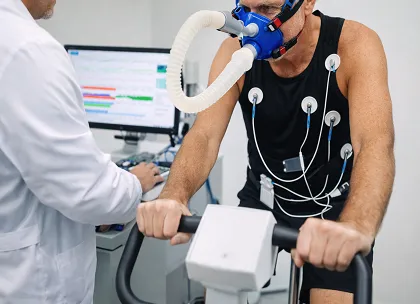
Exercise intolerance is a defining feature of heart failure with preserved ejection fraction (HFpEF), yet its underlying physiologic and metabolic drivers remain incompletely characterized. In a multimodal analysis published in Circulation, invasive cardiopulmonary exercise testing (iCPET), metabolite profiling, and genomics were integrated to characterize exercise-related physiologic deficits and their association with HFpEF severity and outcomes.
Seven predefined deficits were evaluated, including reduced stroke volume and heart rate response, elevated pulmonary capillary wedge pressure/cardiac output (PCWP/CO) slope, increased pulmonary vascular resistance, pulmonary mechanical limitation, impaired peripheral oxygen extraction, and obesity-related increased metabolic cost of initiating exercise.
The iCPET cohort (mean age 61.7±14.1 years; 54% female; body mass index [BMI] 30.6±6.7 kg/m²) demonstrated a wide range of combined cardiac and extracardiac abnormalities. Individuals with ≥5 exercise deficits had a higher risk of cardiovascular events or mortality (hazard ratio [HR] 3.90, 95% confidence interval [CI] 1.74-8.75; P<0.0001).
Metabolite profiling identified signatures linked to individual physiologic deficits. In the Multi-Ethnic Study of Atherosclerosis (MESA; n=6345; ≈20-year follow-up), the metabolite signature associated with PCWP/CO slope was associated with incident heart failure (HR 1.43 per standard deviation increase, 95% CI 1.20-1.71; P<0.001). Incorporation of all metabolic signatures improved risk classification by approximately 20% beyond traditional HFpEF risk factors.
Genetic analyses across approximately 2 million individuals showed enrichment of metabolite-associated pathways in heart failure and overlap with obesity, renal disease, and diabetes.
These findings indicate that exercise-related physiologic deficits and their metabolic signatures are associated with HFpEF development and prognosis.