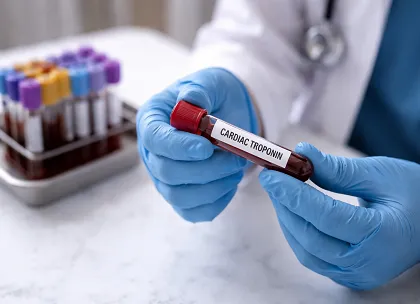
Cardiac troponin elevations after exercise may complicate the evaluation of possible myocardial injury, particularly in athletes presenting soon after prolonged activity. A meta-analysis published in the European Journal of Preventive Cardiology quantified how often these elevations occur and which factors are associated with higher prevalence.
The random-effects meta-analysis screened 4,312 records and included 129 studies involving 7,289 athletes. Participants were 78% male, had a mean age of 44.9 years, and completed exercise sessions with a median duration of 4.2 hours.
Overall, 36% (95% confidence interval [CI], 31%-42%) of athletes had post-exercise cardiac troponin concentrations above the assay-specific upper reference limit, with marked between-study heterogeneity (2%-98%). Higher prevalence was observed with high-sensitivity assays than with conventional assays (58% vs 26%), and with cardiac troponin T assays than cardiac troponin I assays (45% vs 30%).
Among sport types, prevalence was highest in triathlon (49%), running (41%), and cycling (40%), while contact sports (6%) and walking (8%) had the lowest rates. A non-linear association with exercise duration was observed, with the highest prevalence (52%) after 3–6 hours of activity. Sex and training status were not associated with elevation rates.
The findings suggest that post-exercise troponin elevations are common and should be interpreted in the context of assay type and recent exercise exposure.