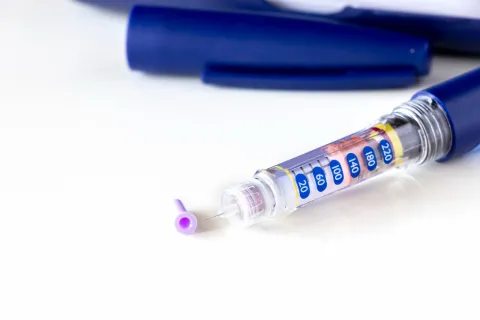
For children and adolescents with Type 1 diabetes mellitus (T1DM) already near glycemic targets on insulin pump therapy, whether ultra-rapid insulin analogs provide additional benefit remains uncertain. A randomized crossover trial published in Diabetic Medicine found that switching from standard insulin aspart (SIA) to faster insulin aspart (FIA) did not improve time in range (TIR) or other continuous glucose monitoring (CGM) metrics.
This prospective, open-label, 1:1 crossover study enrolled participants aged 6 to 17 years with T1DM duration of at least 1 year, continuous subcutaneous insulin infusion (CSII) use for at least 3 months, CGM use for at least 1 month, and glycated hemoglobin (HbA1c) below 64 mmol/mol (<8%). After a 2-week run-in period, participants were randomized to one insulin for 4 weeks and then crossed over to the alternate insulin for another 4 weeks. All participants used the same CGM system.
Seventy-seven children were enrolled. Mean diabetes duration was approximately 7 years, 66% were male, and mean HbA1c was 53 mmol/mol (7%). Mean TIR was 68.5% (standard deviation [SD] 12.3%) with SIA and 67.6% (SD 12.1%) with FIA. The between-treatment difference was −0.9% (95% confidence interval [CI], −2.60 to 0.86; P=0.322).
Time in a tight range was also similar between groups at 46.3% with SIA and 45.4% with FIA (P=0.674). Additional CGM-derived glycemic measures showed similar patterns across both treatment phases.
These findings indicate that among youth with T1DM already achieving glycemia close to target on CSII, switching from SIA to FIA did not provide meaningful improvement in TIR or broader CGM outcomes.