In a major advancement in understanding the complex relationship between diet and heart health, a new genetic study published in Atherosclerosis Plus has found that certain dietary preferences can causally influence the risk of cardiovascular diseases (CVDs).
Using data from genome-wide association studies (GWAS) covering 38 dietary preferences and seven common CVDs, researchers applied Mendelian randomization (MR) to test whether food preferences directly cause changes in cardiovascular risk.
The study uncovered 10 significant causal links between specific food choices and CVD outcomes, especially peripheral artery disease (PAD), stroke, and coronary artery disease (CAD). The analysis also analyzed body mass index (BMI) as a common mediator. Educational attainment partially explained the association between a preference for muesli and increased risk for PAD.
• The study employed Mendelian randomization on GWAS data for 38 food preferences and 7 cardiovascular diseases (CVDs).
• Identified 10 significant causal links between diet and heart disease risk.
• Eight dietary preferences were associated with three CVD outcomes with strong statistical significance.
• Obesity (BMI) was a common mediator for many food-CVD links.
• Educational attainment uniquely mediated the muesli-PAD connection.
• Genetic evidence confirms that diet plays a causal role in the risk of cardiovascular disease.
• Findings support the use of targeted nutrition and obesity prevention strategies for improving heart health.
Lee MD, Voight BF. Association of dietary preferences with cardiovascular disease: a Mendelian randomization study. Atheroscler Plus. 2025;60:43-50. Published 2025 May 7. doi:10.1016/j.athplu.2025.04.002
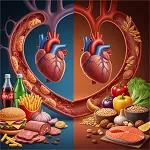
In a major advancement in understanding the complex relationship between diet and heart health, a new study has found that certain dietary preferences can causally influence the risk of cardiovascular diseases (CVDs).