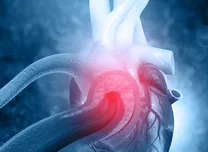
A novel three-dimensional mapping approach has shed light on how scar architecture shapes VT pathways in ischemic cardiomyopathy. The findings, published in Circulation, highlight hyperboloid geometry as the predominant form of viable myocardial corridors involved in VT propagation.
The study analyzed 46 patients (mean age, 68 years; 95% male) who underwent late gadolinium-enhanced cardiovascular magnetic resonance (LGE-CMR) before their first VT ablation between 2018 and 2024. Using image-based reconstruction, the analysis coregistered viable tissue corridors crossing infarct zones with VT entrance and exit sites determined by entrainment or pace mapping.
Among 125 VT exit sites, 93.6% demonstrated hyperboloid geometry, while only 4.8% and 1.6% showed funnel and cylindrical forms, respectively. Corridor exits had a significantly larger ostium angle than their corresponding entry sites (mean 102.8° ± 34.1° vs 83.2° ± 29.5°; P < 0.001), suggesting asymmetric propagation through scarred myocardium.
These findings establish the hyperboloid as a key VT circuit structure and highlight the value of 3D geometric modeling for guiding ablation planning.