Endocrinologists and diabetologists increasingly prescribe glucagon-like peptide-1 analogues for their strong benefits in blood sugar control, weight loss, and heart-kidney protection, but lingering concerns about pancreatitis risk have prompted this large real-world analysis focusing specifically on patients already vulnerable due to prior pancreatitis episodes or elevated lipase levels.
In the study published in the Diabetes Metabolism: Research and Reviews, the researchers extracted retrospective data from a major health maintenance organization covering over 4.5 million insured members through the MDClone platform, assembling a cohort of 46,186 adults with diabetes who had documented pancreatitis or lipase elevation above 1.5 times the upper reference limit.
Large Cohort Confirms Elevated Risk Signal
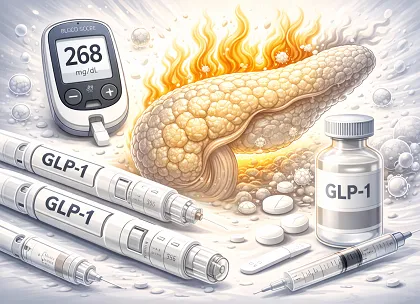
The study population included 10,933 patients with prior pancreatitis and 35,253 with isolated elevated lipase, reflecting 55% men with median age of 70.9 years—typical high-risk diabetes patients often seen in specialty clinics. Time-varying analysis identified GLP-1 analogue use as an independent risk factor for recurrent pancreatitis with hazard ratio of 1.252 (95% CI 1.178-1.332), meaning these drugs increased recurrence odds by about 25% compared to non-users in this vulnerable group.
Adjustments Strengthen the Association
This elevated risk persisted after rigorous multivariate adjustments accounting for gender differences, alcohol consumption history, and concurrent medications known to trigger pancreatitis, confirming GLP-1 analogues contribute additional risk beyond conventional factors and aligning with existing pharmacovigilance reports from global safety databases.
Clinical Decision-Making Faces New Data
In elderly diabetes patient with past pancreatitis asking about tirzepatide or semaglutide, this analysis urges careful risk-benefit discussions, potentially favoring DPP-4 inhibitors, SGLT2 inhibitors, or insulin when recurrence history exists, while monitoring lipase closely during GLP-1 titration if benefits outweigh hazards.
Caution Extends to Lipase Elevation
Even patients without pancreatitis but with repeatedly high lipase levels, often discovered incidentally, show similar risk elevation, broadening caution to a larger pool than previously recognized and prompting proactive enzyme checks before GLP-1 initiation.
Featured
Off
Page Content
#ffffff
Anonymous user
On
Authenticated user
On
Premium
On
Paid / Sponsored
On
Key highlights
- GLP-1 analogue use associates with 25% higher recurrent pancreatitis risk (HR 1.252) in diabetes patients with prior pancreatitis or elevated lipase after multivariate adjustment.
- The cohort of 46,186 high-risk patients reflects real-world older adults (median age 70.9 years) commonly managed in diabetes clinics.
- Risk persists despite adjusting for gender, alcohol use, and pancreatitis-causing medications, confirming GLP-1's independent contribution.
- Findings align with pharmacovigilance signals, supporting caution when prescribing GLP-1 drugs to patients with pancreatitis history.
Source
Calvarysky B, Gal Y, Kushnir S, et al. Glucagon-Like Peptide-1 Analogues and the Risk of Recurrent Pancreatitis in Diabetic Patients With History of Pancreatitis or Elevated Lipase: Retrospective Cohort Analysis. Diabetes Metab Res Rev. 2026 Jan;42(1):e70116. doi: https://doi.org/10.1002/dmrr.70116.
Thumbnail
Speciality
Currency
Sub Speciality
Sub Sub Speciality
Short Description
GLP-1 analogues increase recurrent pancreatitis risk by 25% in high-risk diabetes patients with prior attacks or high lipase, per large health system analysis.
User Segments
Release Date
Featured Order
0
Is Paid
0
Send Notification
Off